Dora Budor, Jana Euler, Jasper Marsalis, Simon Dybbroe Møller, Nina Porter, Margaret Raspé, Davide Stucchi.
I Ciclopi (Eye, Camera, Myth)
2 April – 28 June 2026
Curated by Saim Demircan
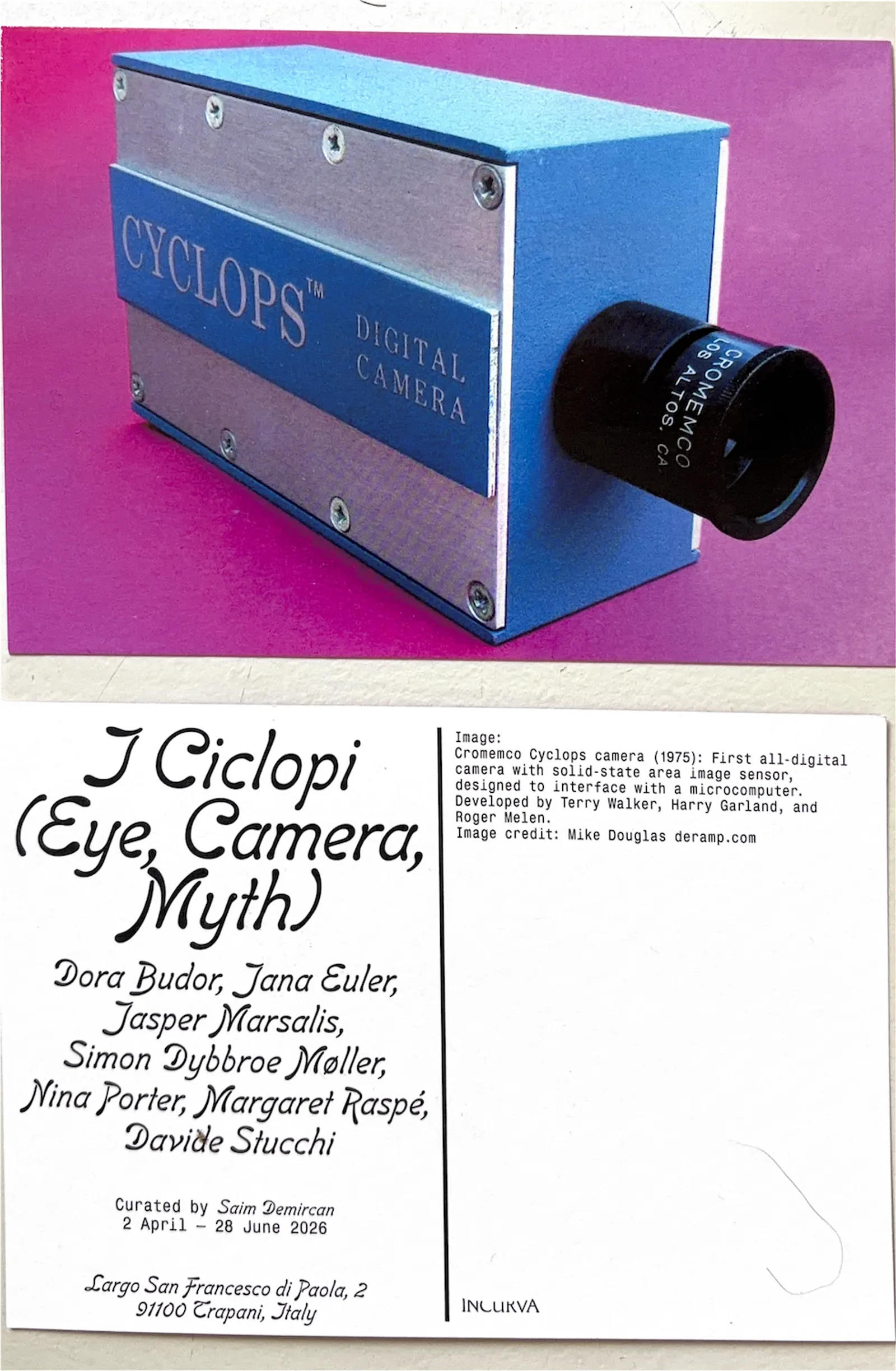
In a short text titled ‘Art Through the Camera’s Eye’ (c.1971), Robert Smithson imagines the camera store as a setting for a horror film based on the myth of the Cyclops, as it appears in Homer’s The Odyssey. In Smithson’s version, the camera store would replace the cave where the Cyclops Polyphemus traps Odysseus and his men, and Odysseus himself would play the role of the camera clerk: “Each click would expose the clerk and his store to partial annihilation,” he writes. Here, the camera lens is the cyclopic eye, watchful and devouring, which “alludes to many abysses.” To be seen through this single eye meant death, suggests Smithson, who himself was overwhelmed by the plethora of camera technologies available at the time, and suffered fatigue at the “sight of rows of equipment.”
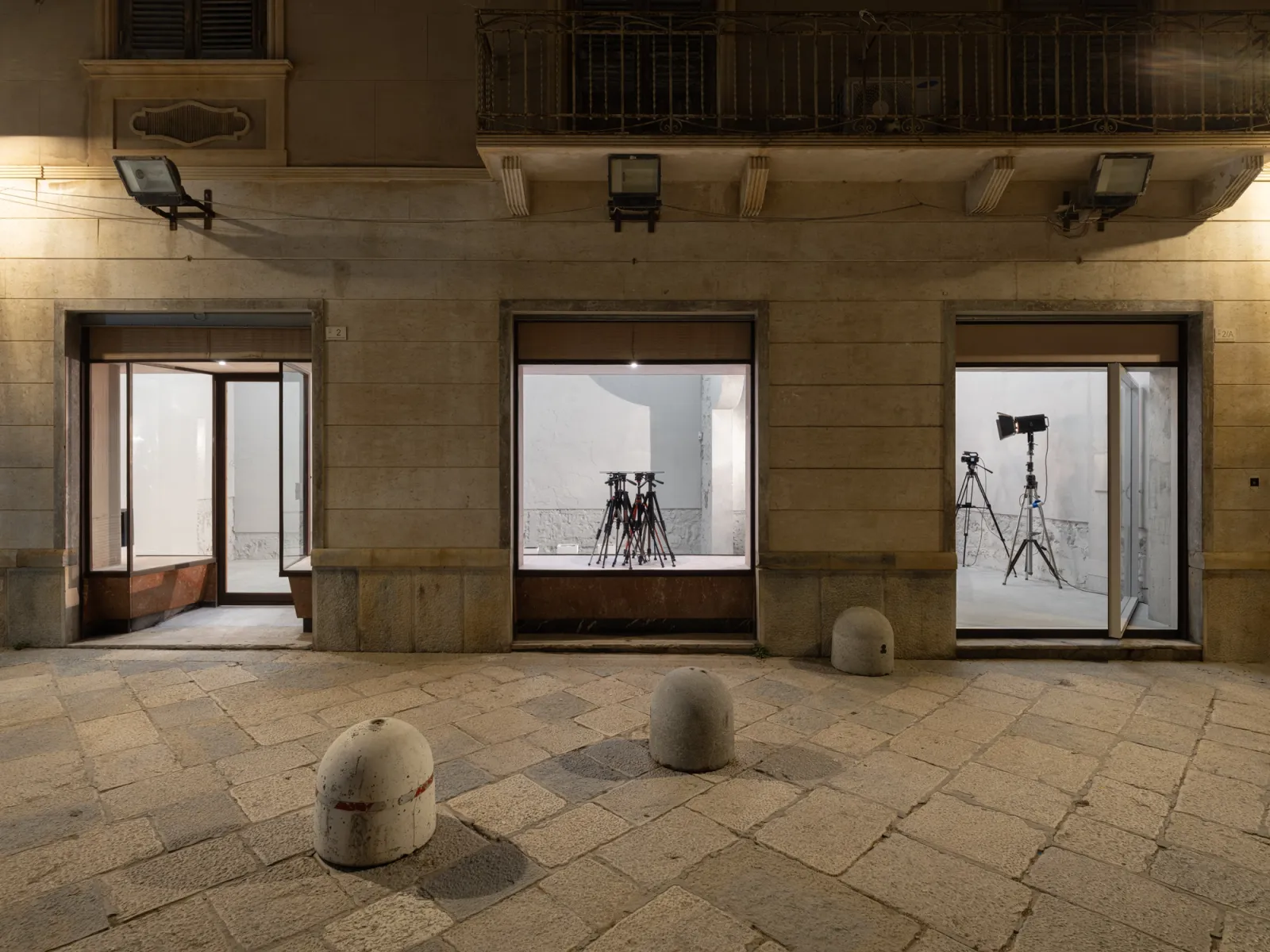
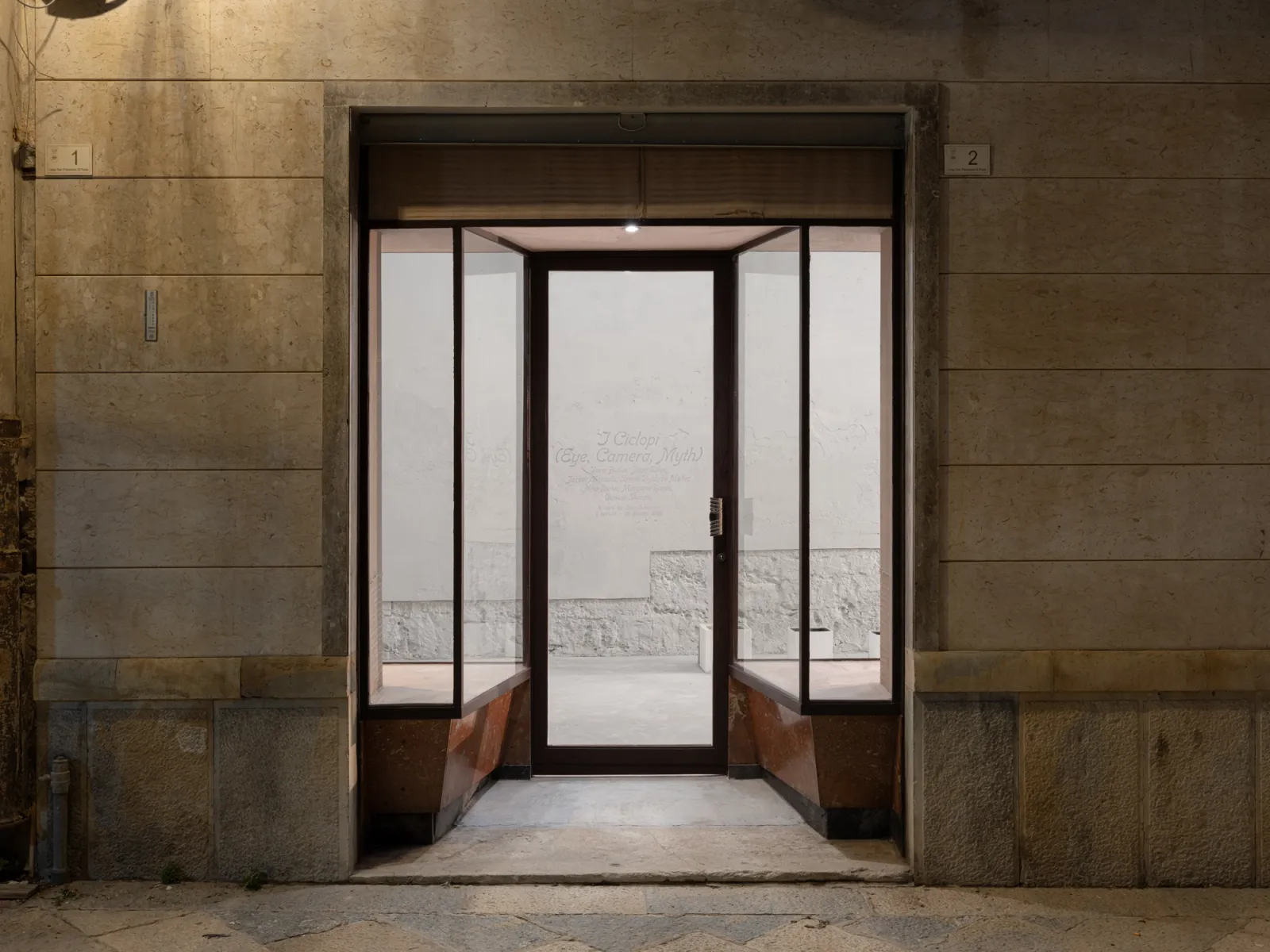
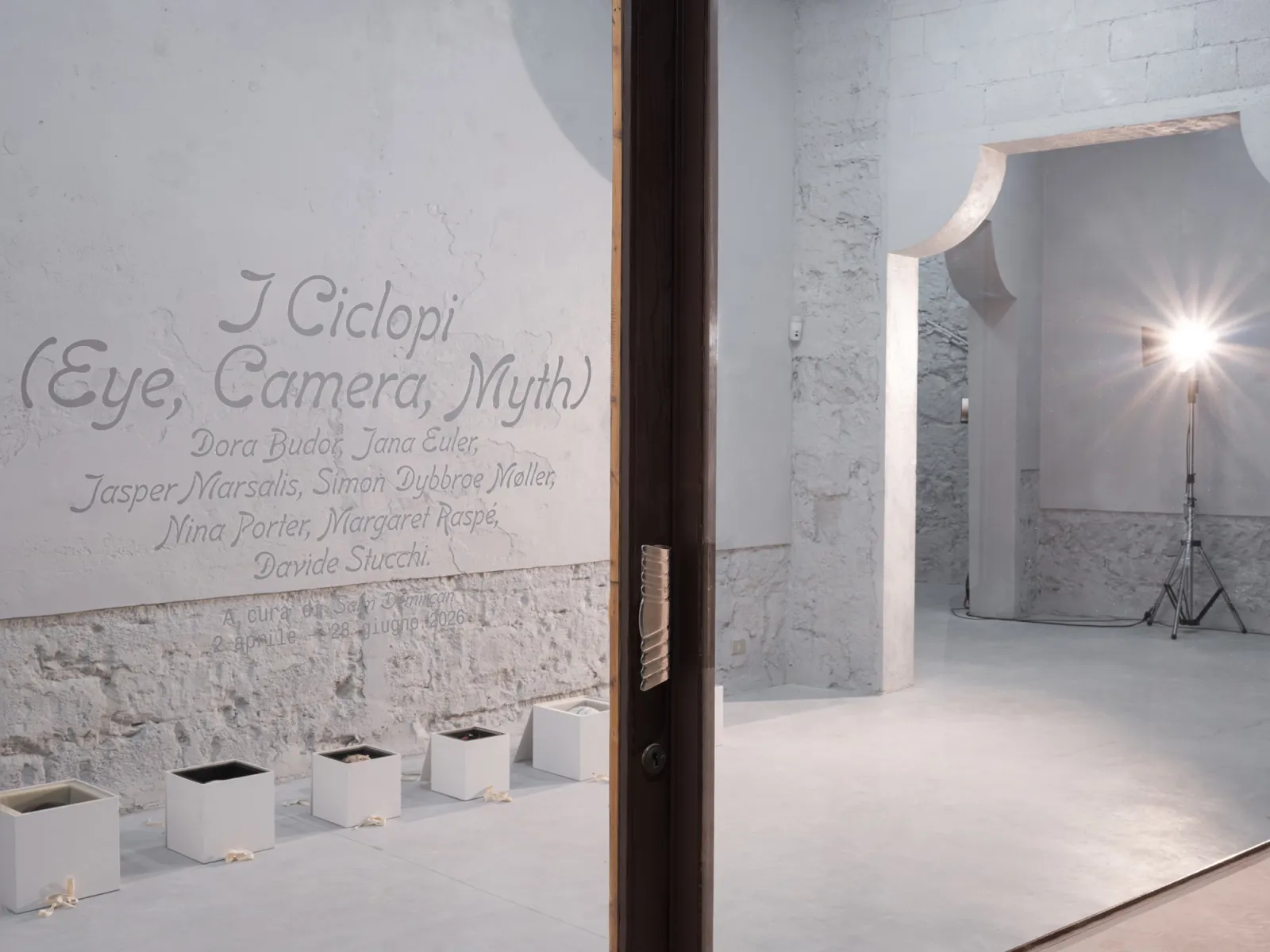
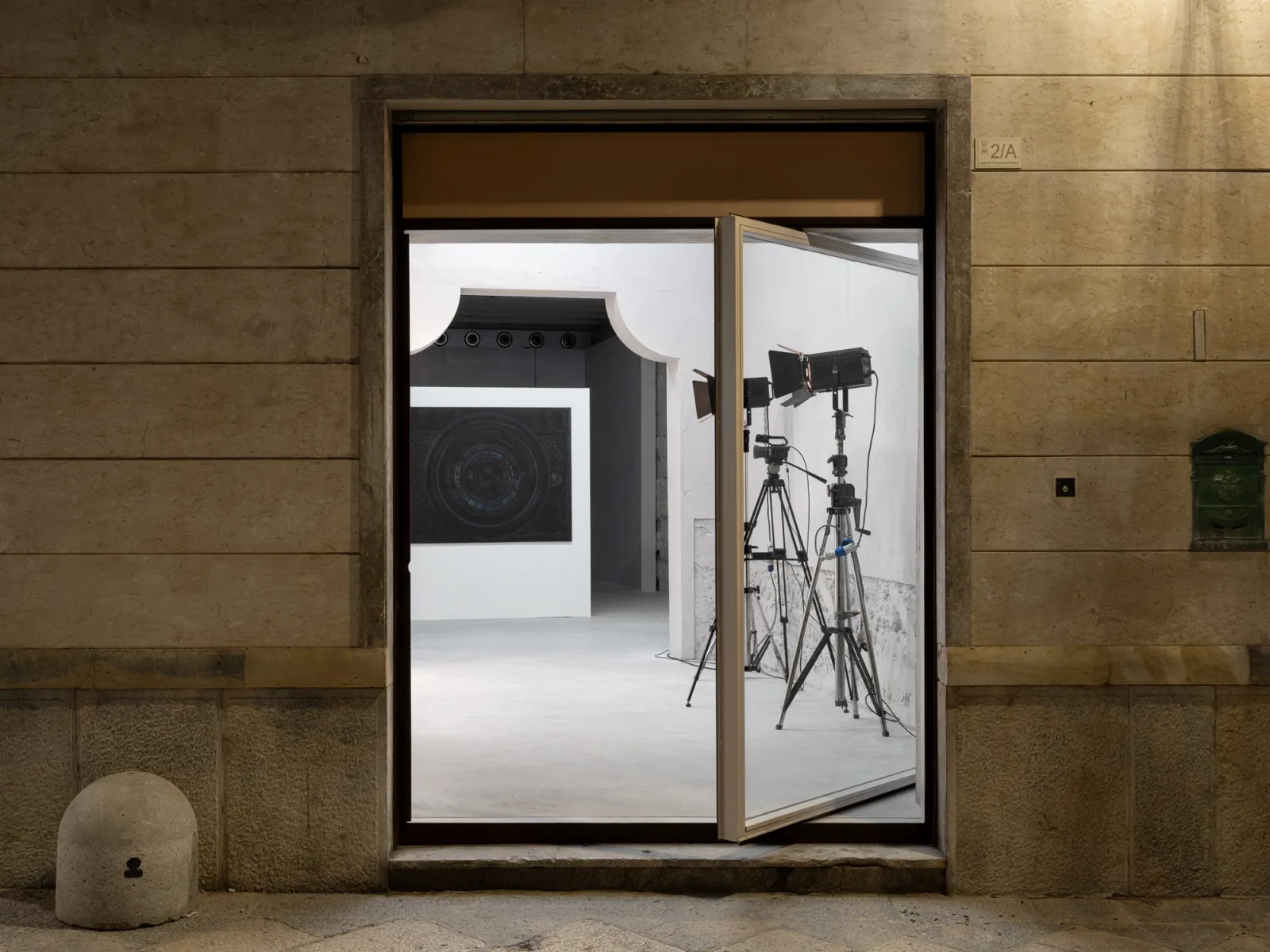
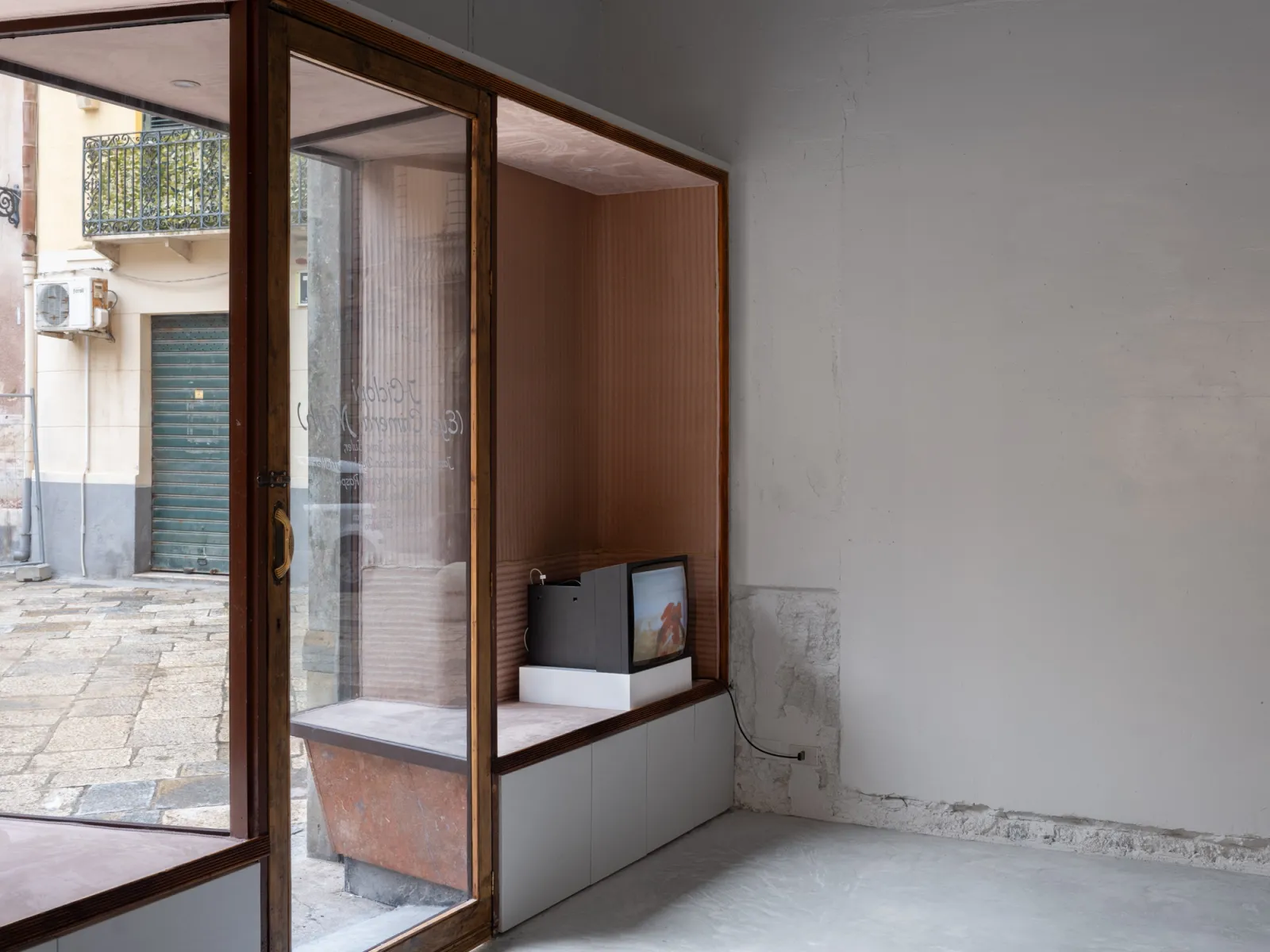
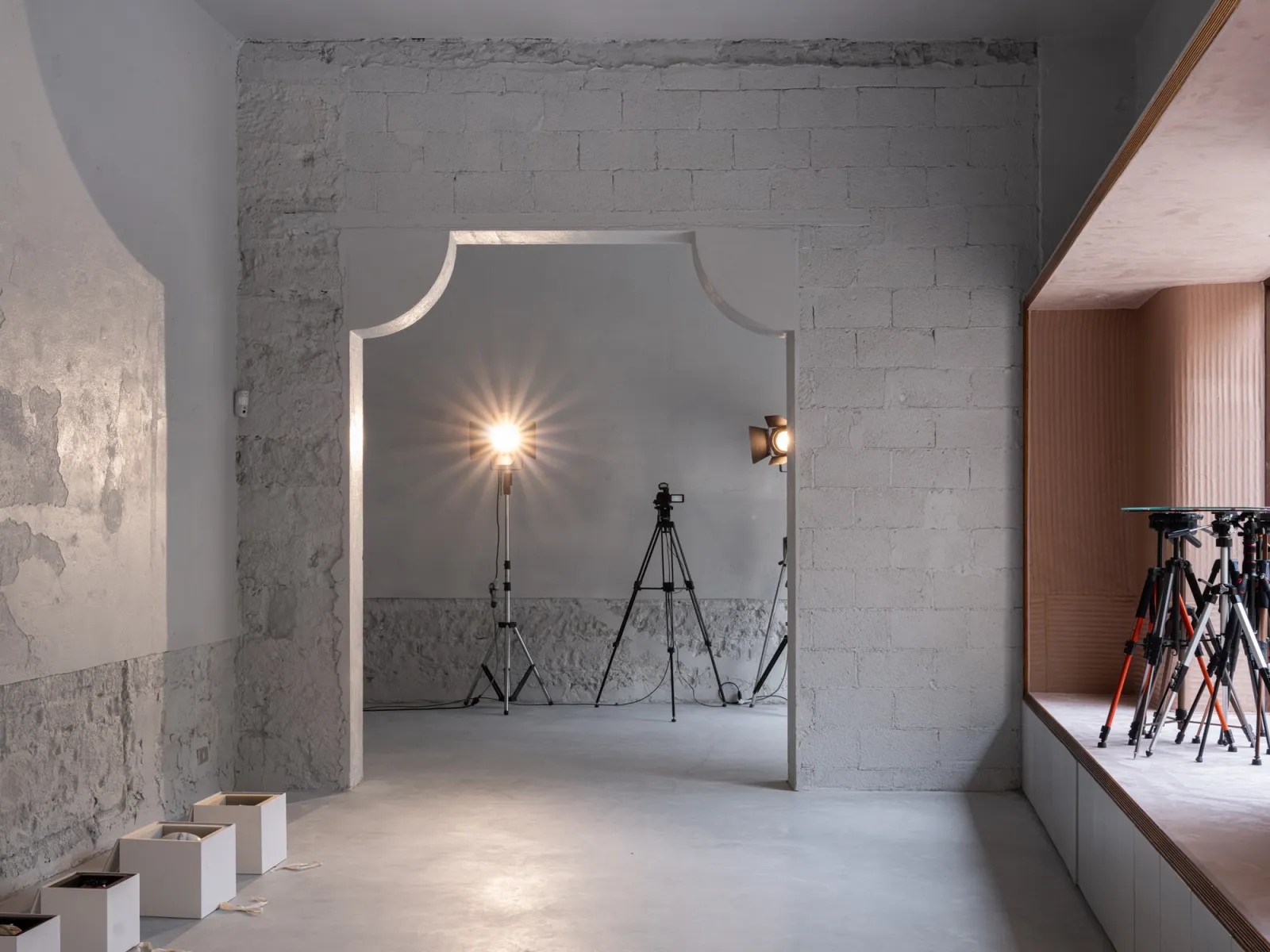
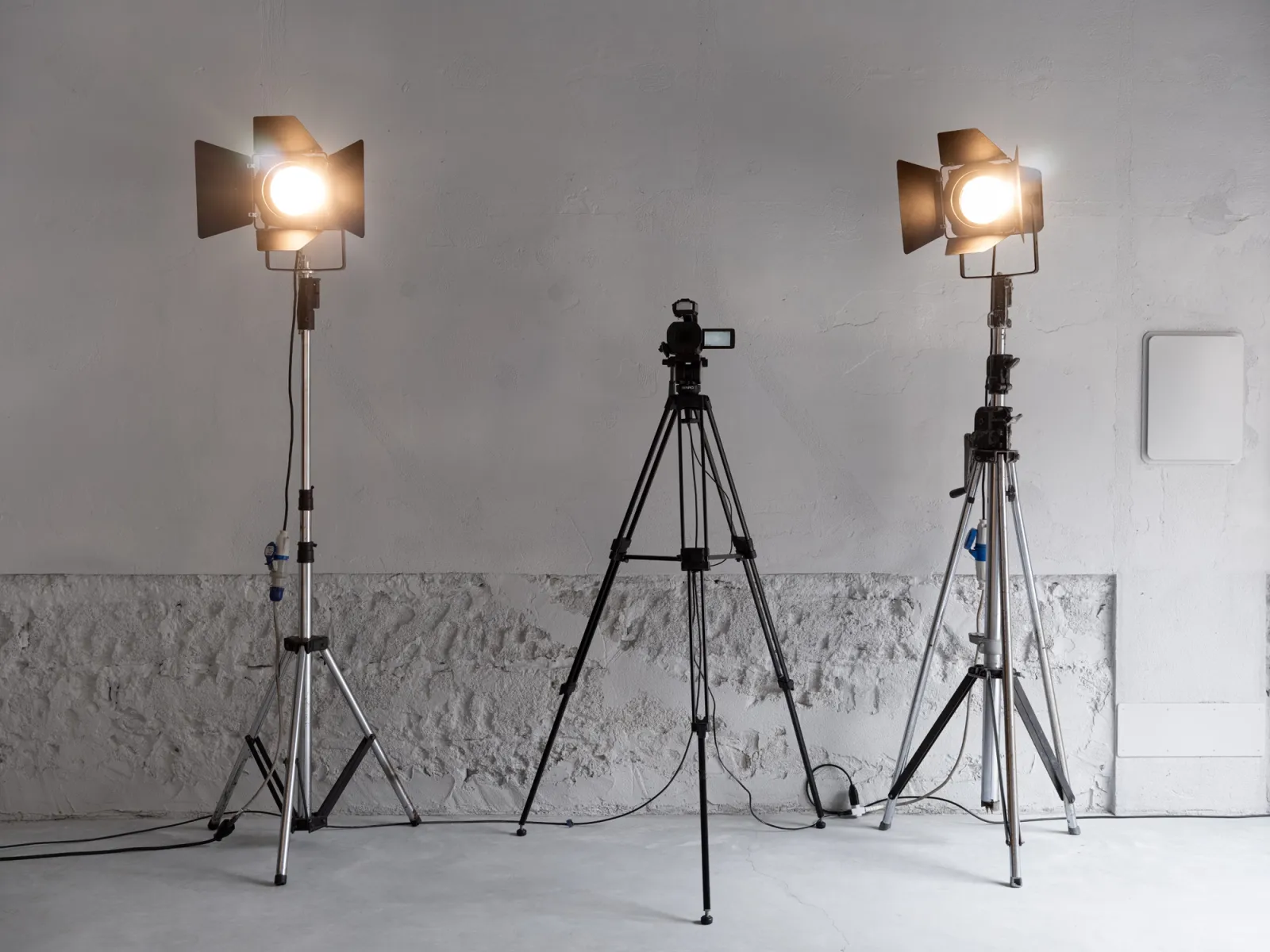
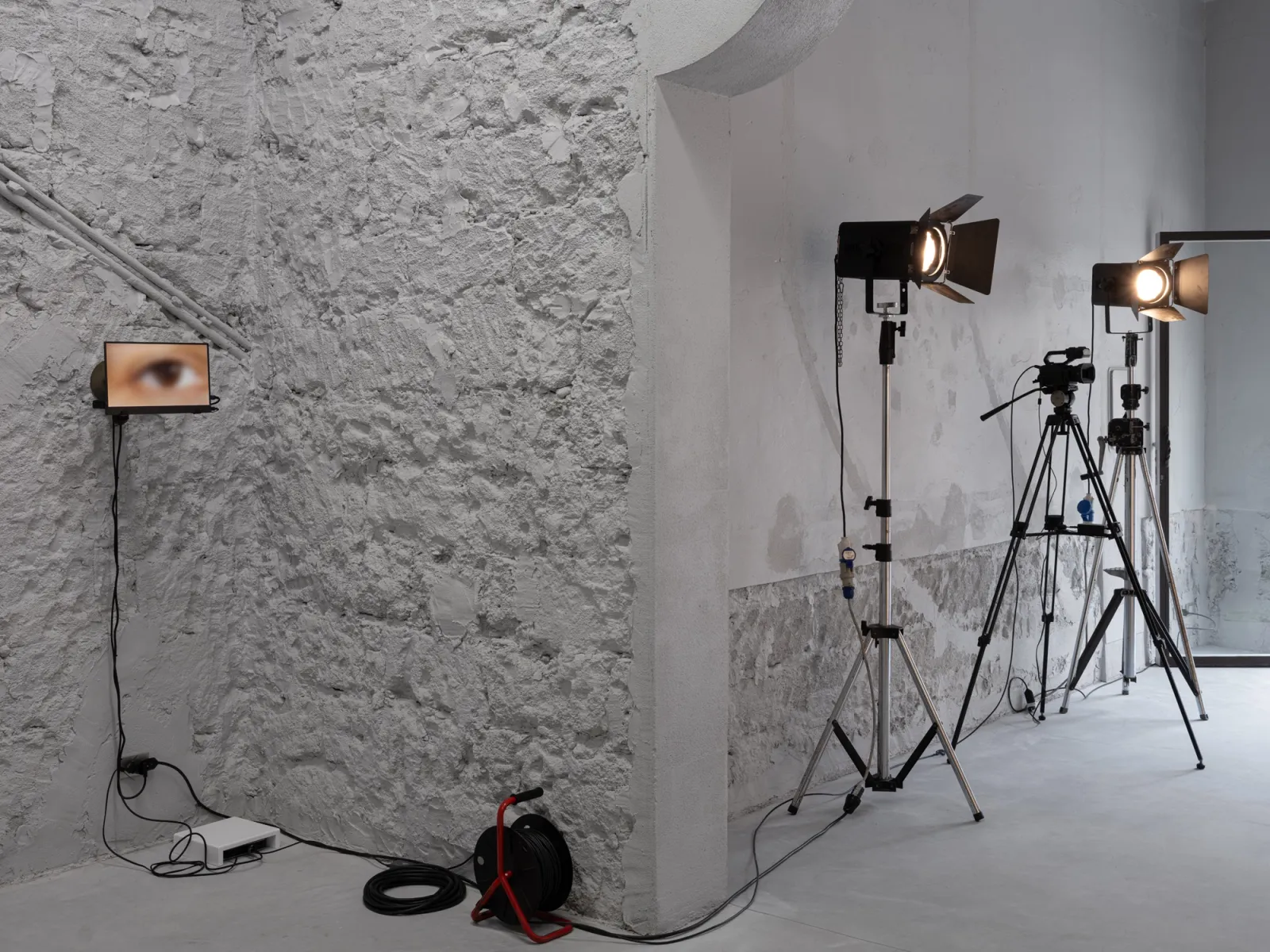
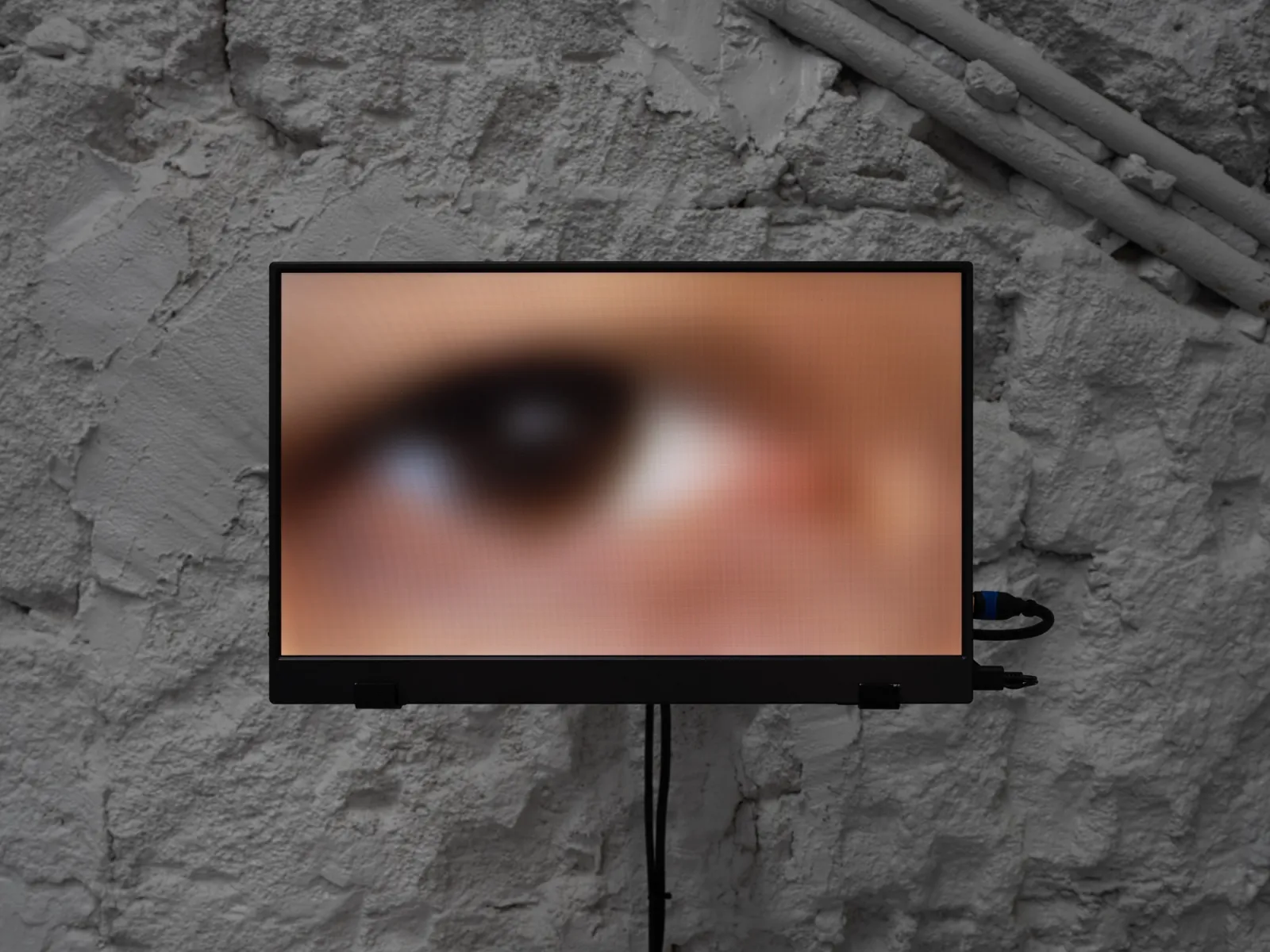
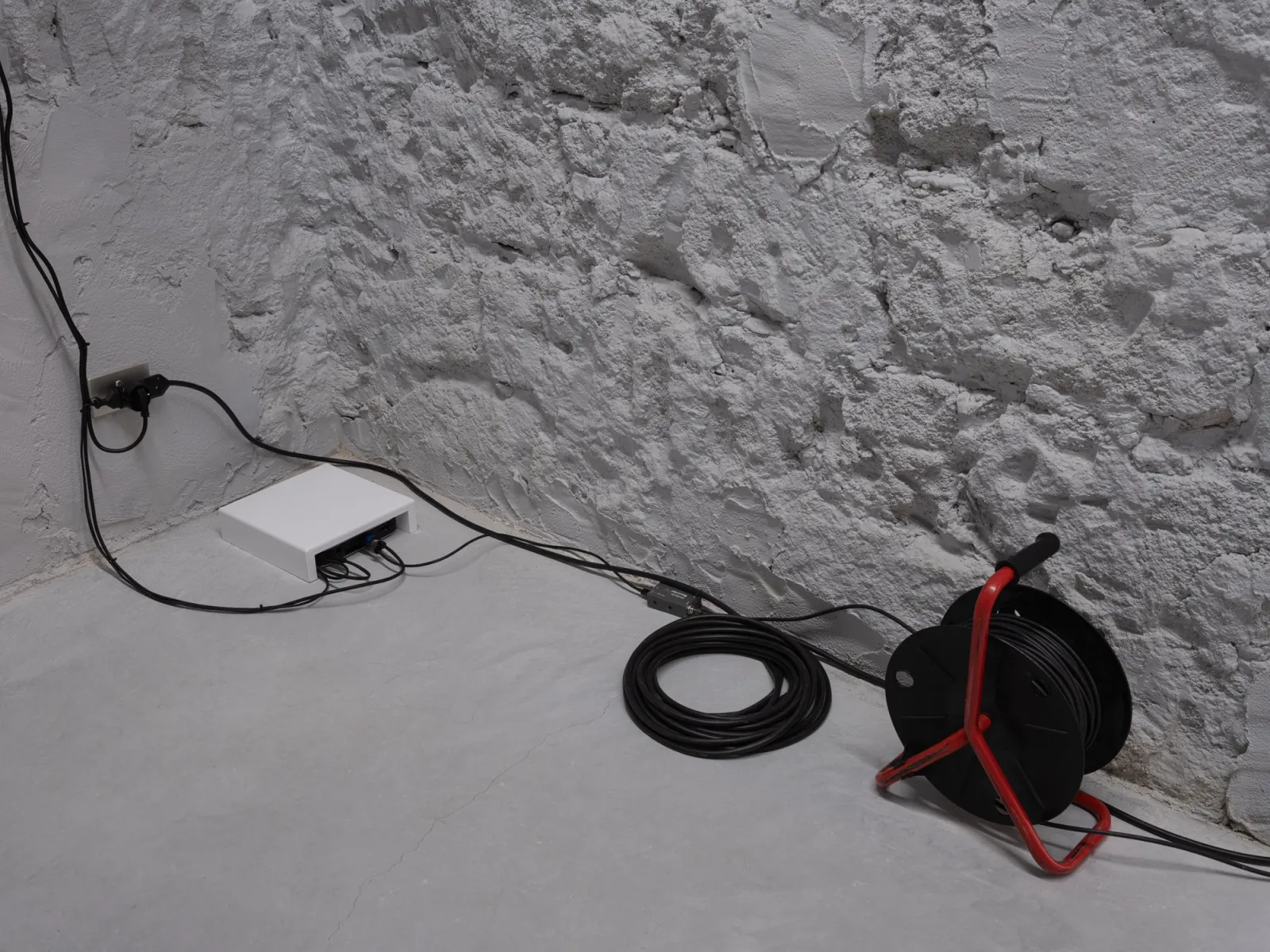
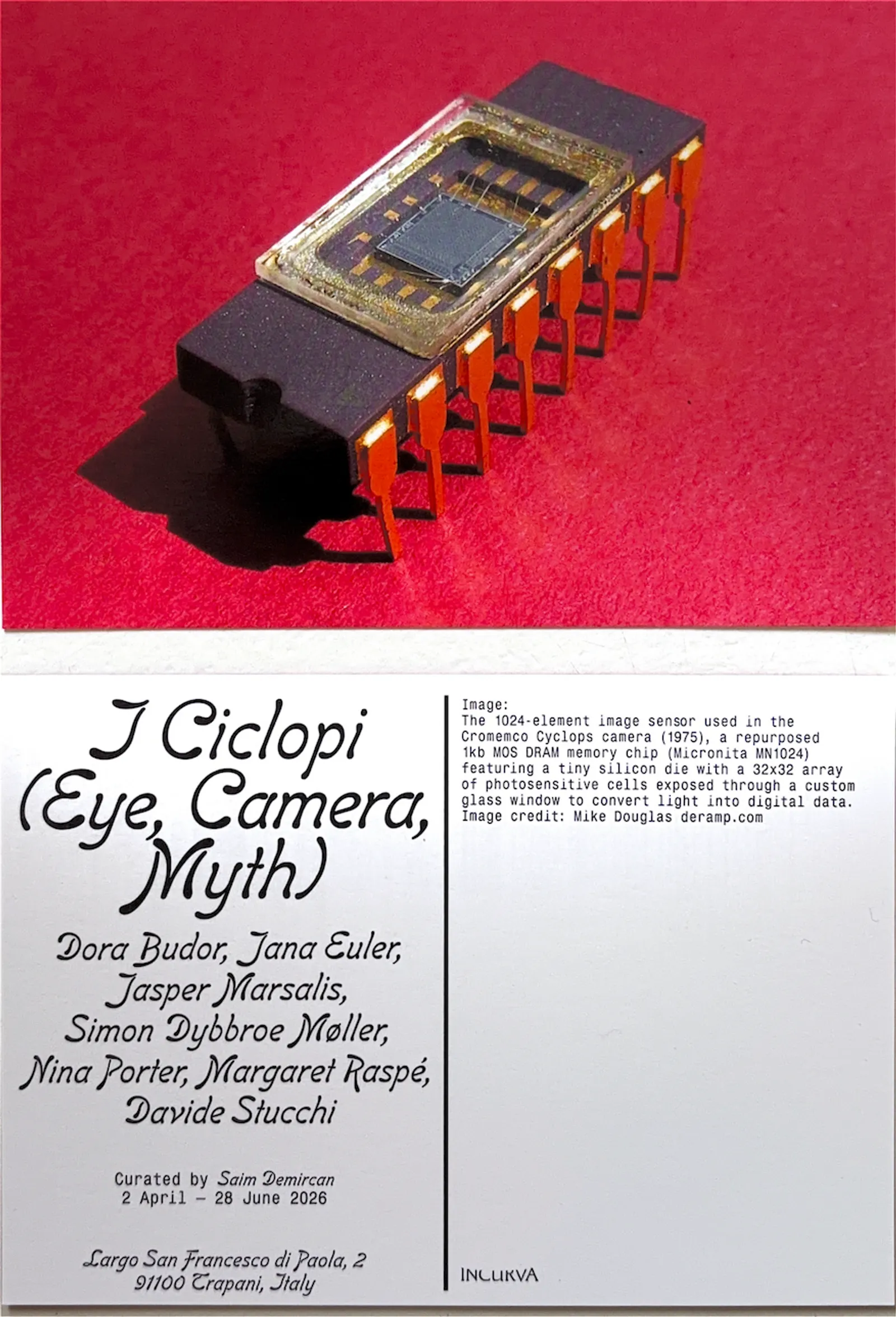
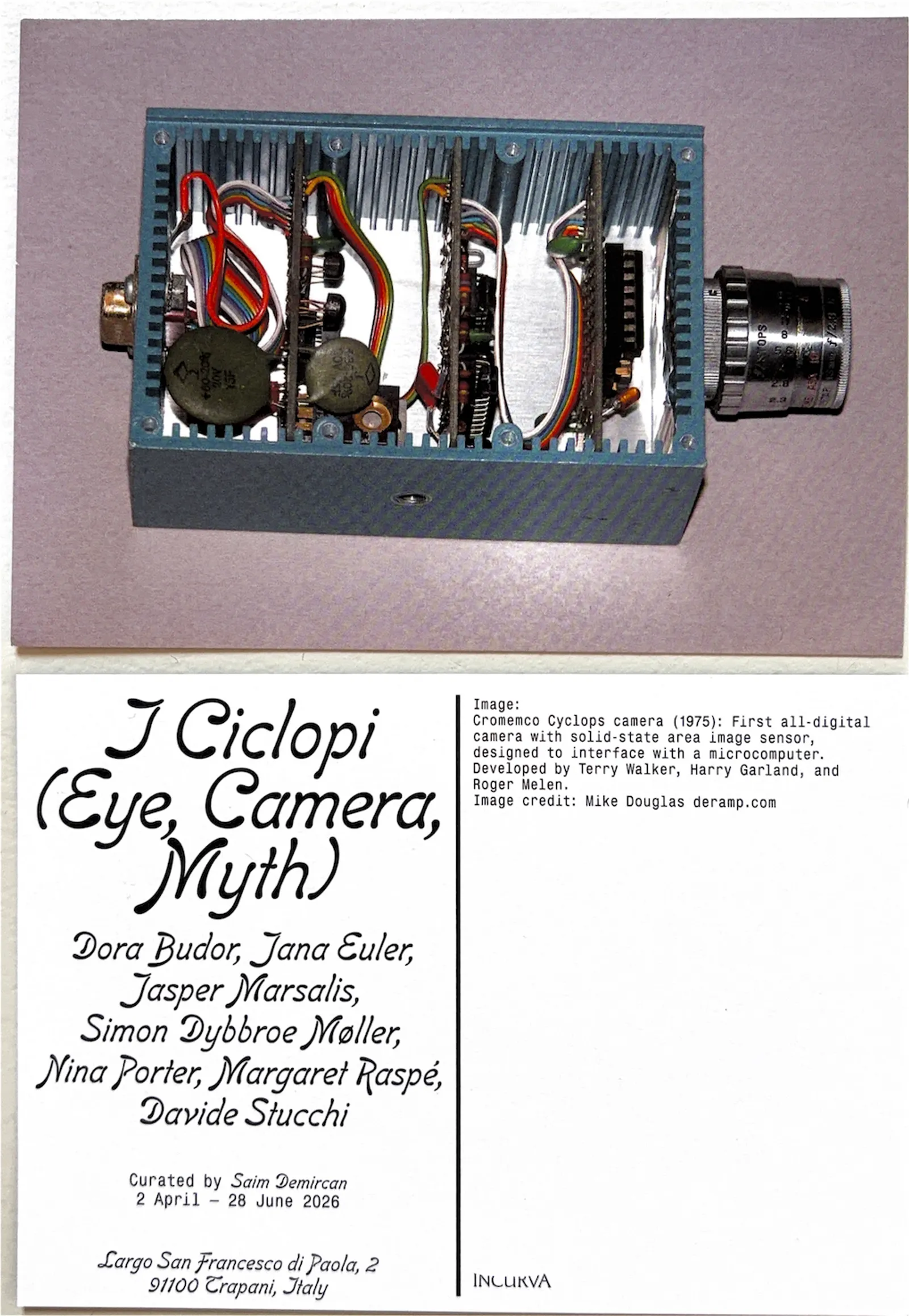
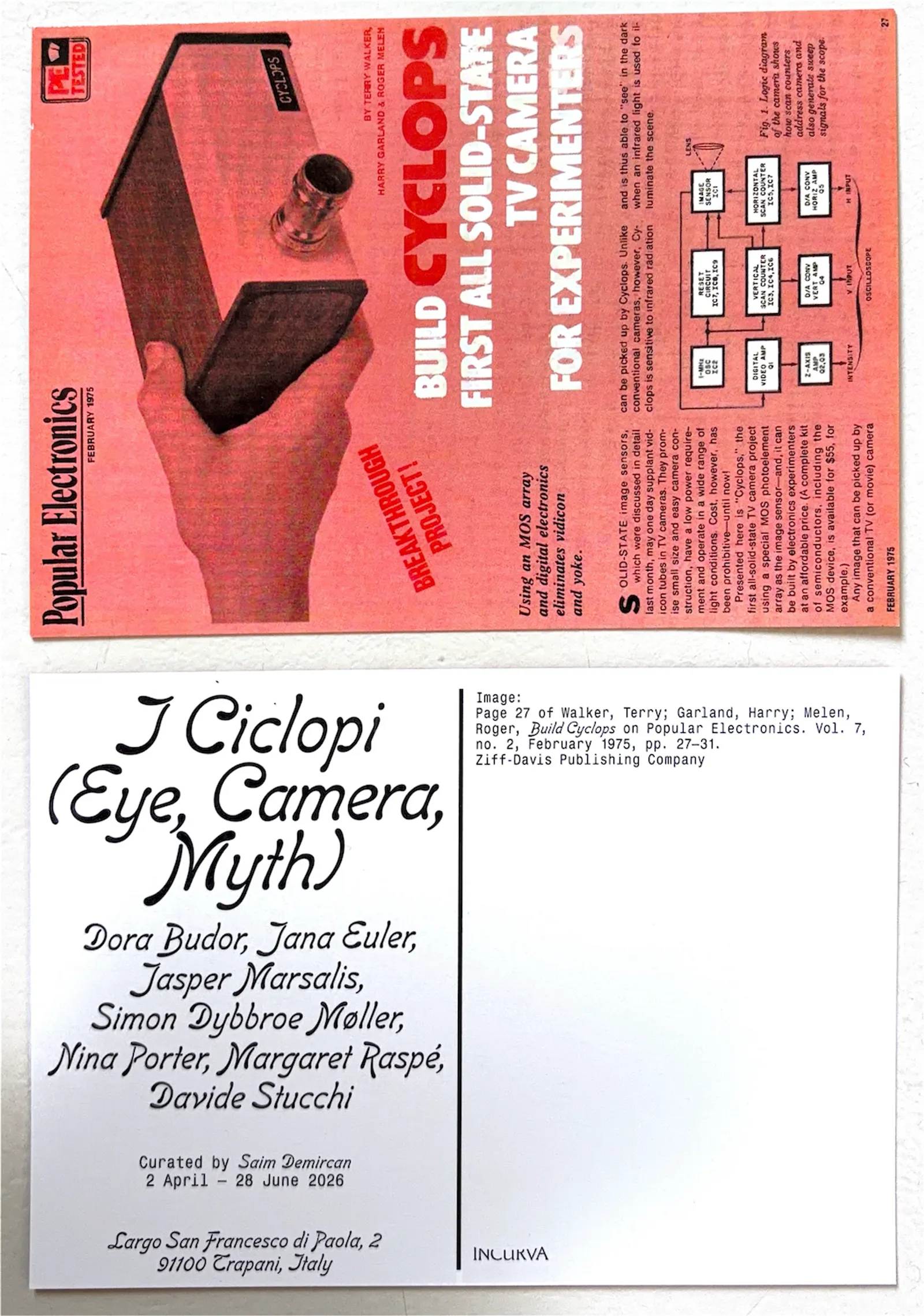
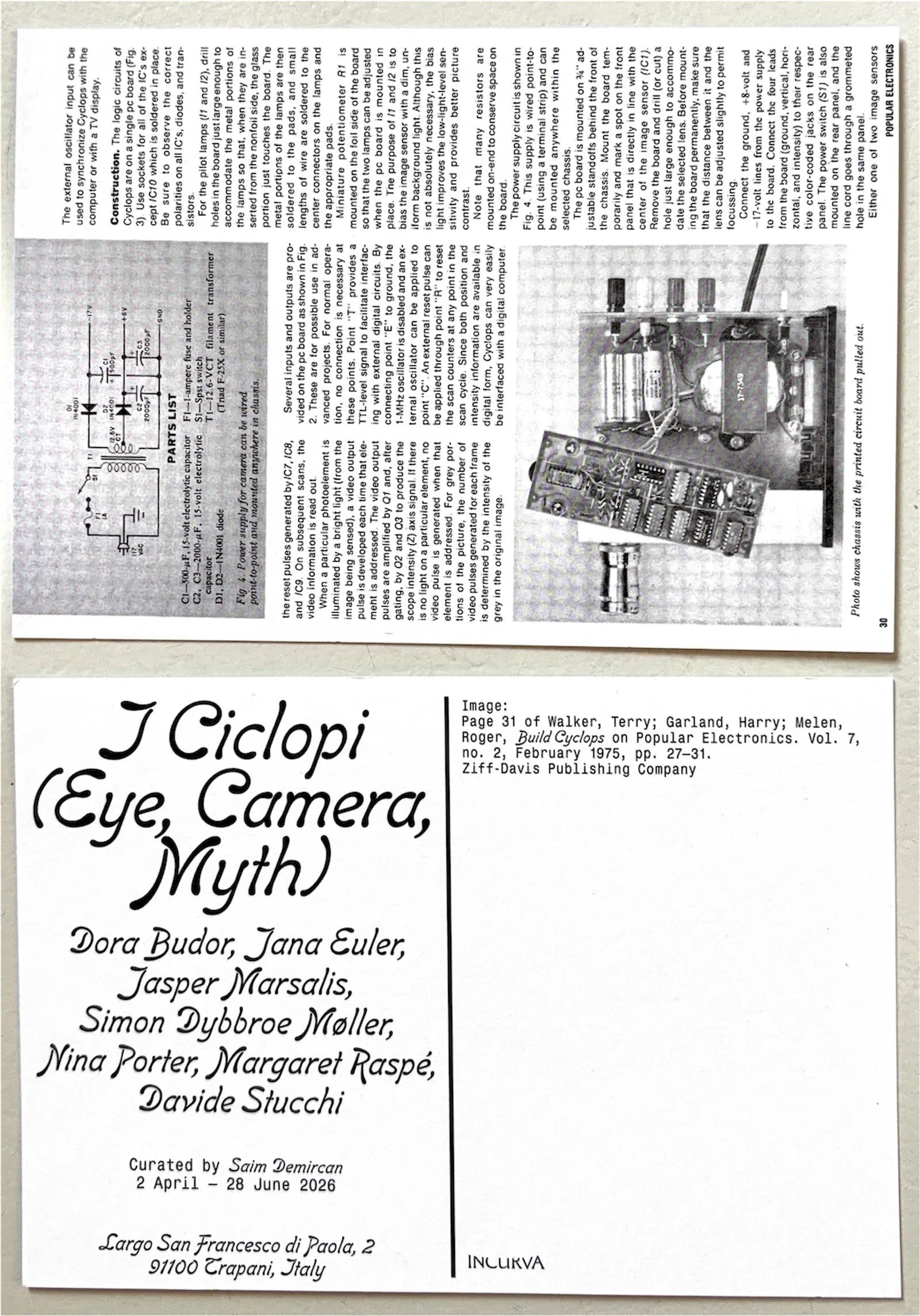
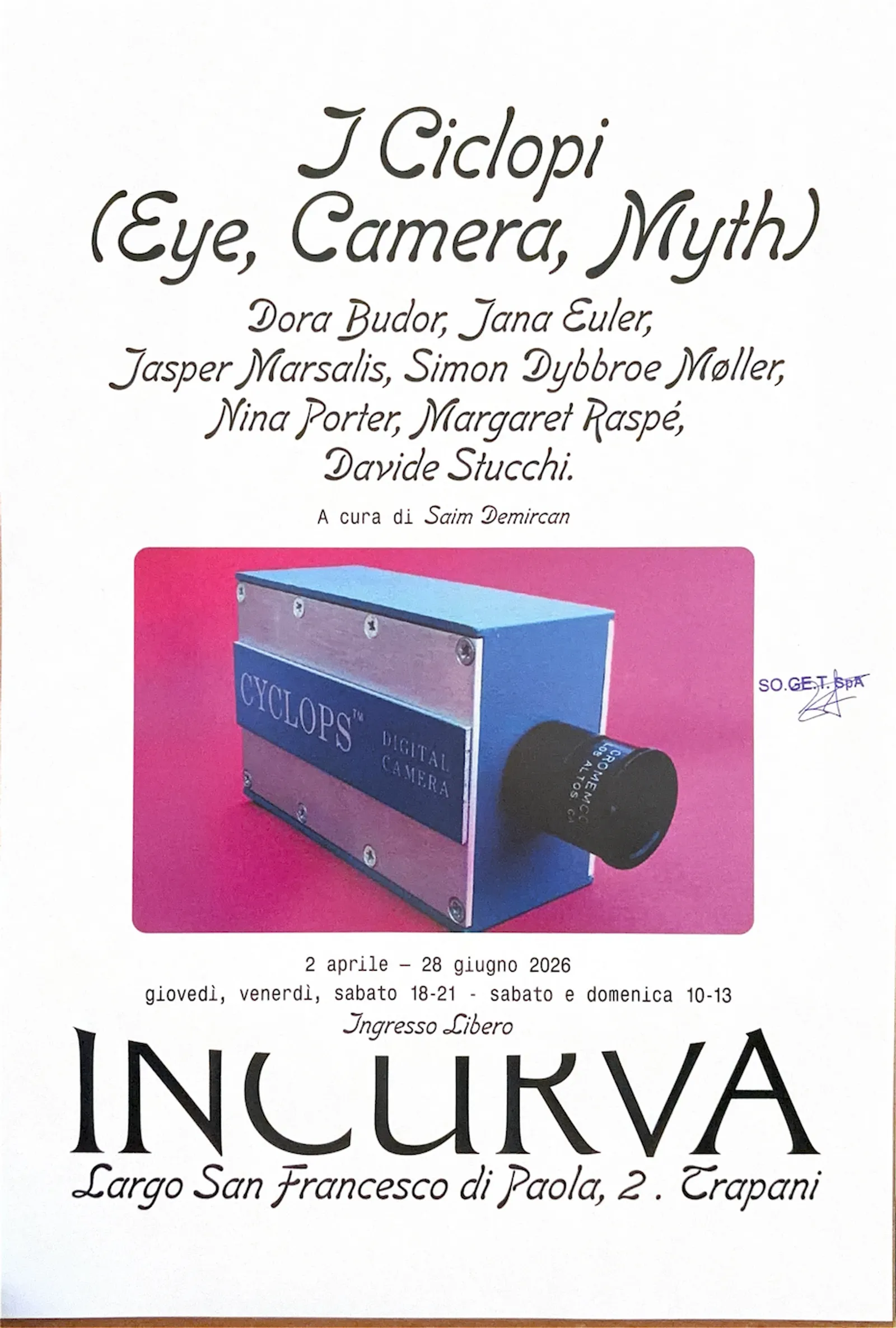
The presence of the camera in everyday life is now ubiquitous – in a sense, we are all living in Smithson’s camera store. Taking up this connection between the singular eye and the camera’s lens, I Ciclopi (Eye, Camera, Myth) brings together artworks that demonstrate forms of cyclopic vision by alluding to, repurposing, or modifying camera technologies, to consider how we see or are seen through a one-eyed point of view. This motif runs throughout the show, beginning with Jasper Marsalis’ Eye 3 (2026), for which the artist has developed software that recognizes a person’s eye, transmitting its image from a video camera to a small monitor installed in another part of the exhibition. The setup of equipment in the entrance of INCURVA deliberately stages this process, riffing off the cult of personality whereby no-one is safe from an ever-present predatory eye.
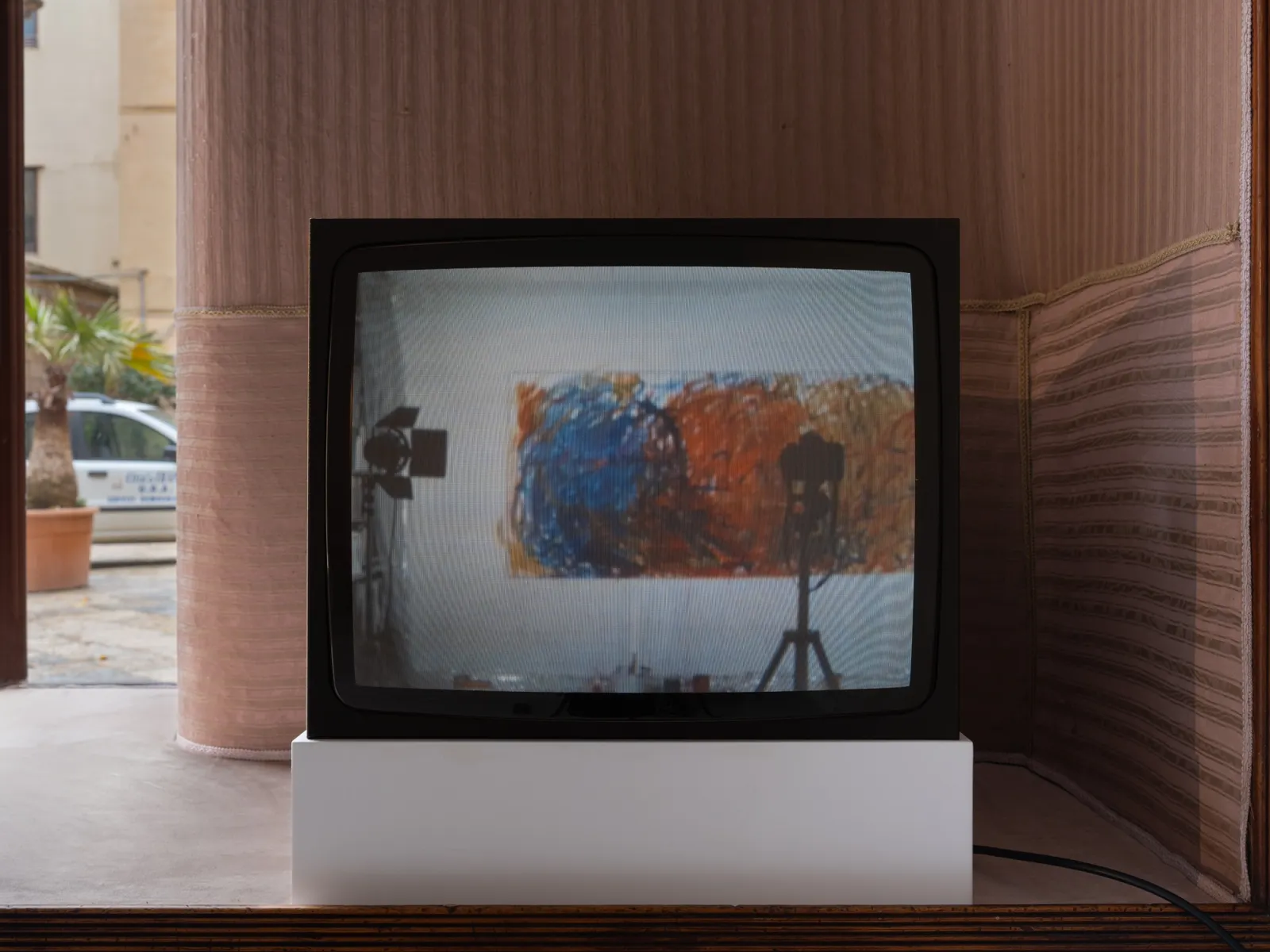
Elsewhere in the exhibition, other artists have innovated with cameras, with precedent set by Margaret Raspé’s 1983 film, Gelb, Rot und Blau entgegen (Towards Yellow, Red and Blue). In the late 1970s, Raspé devised and built a ‘camera helmet’ to record often mundane, domestic chores and her own expressionistic painting (in the final shot of Gelb, Rot und Blau entgegen, the artist turns to face a camera set up to document her painting). While this subjective point of view has been mainstreamed in the advent of GoPro technologies, Raspé filmed directly what she saw as a ‘camera-woman-machine’.
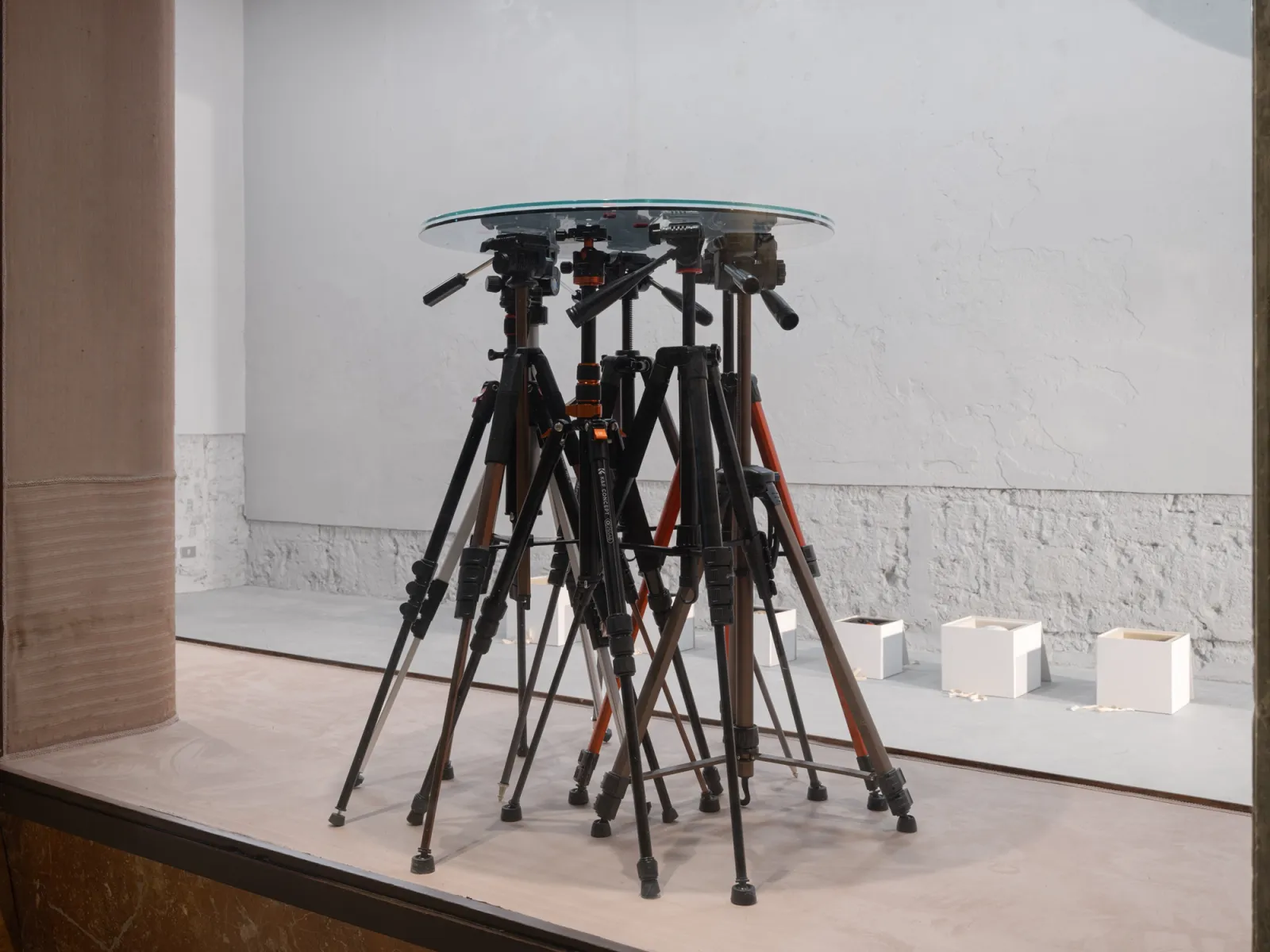
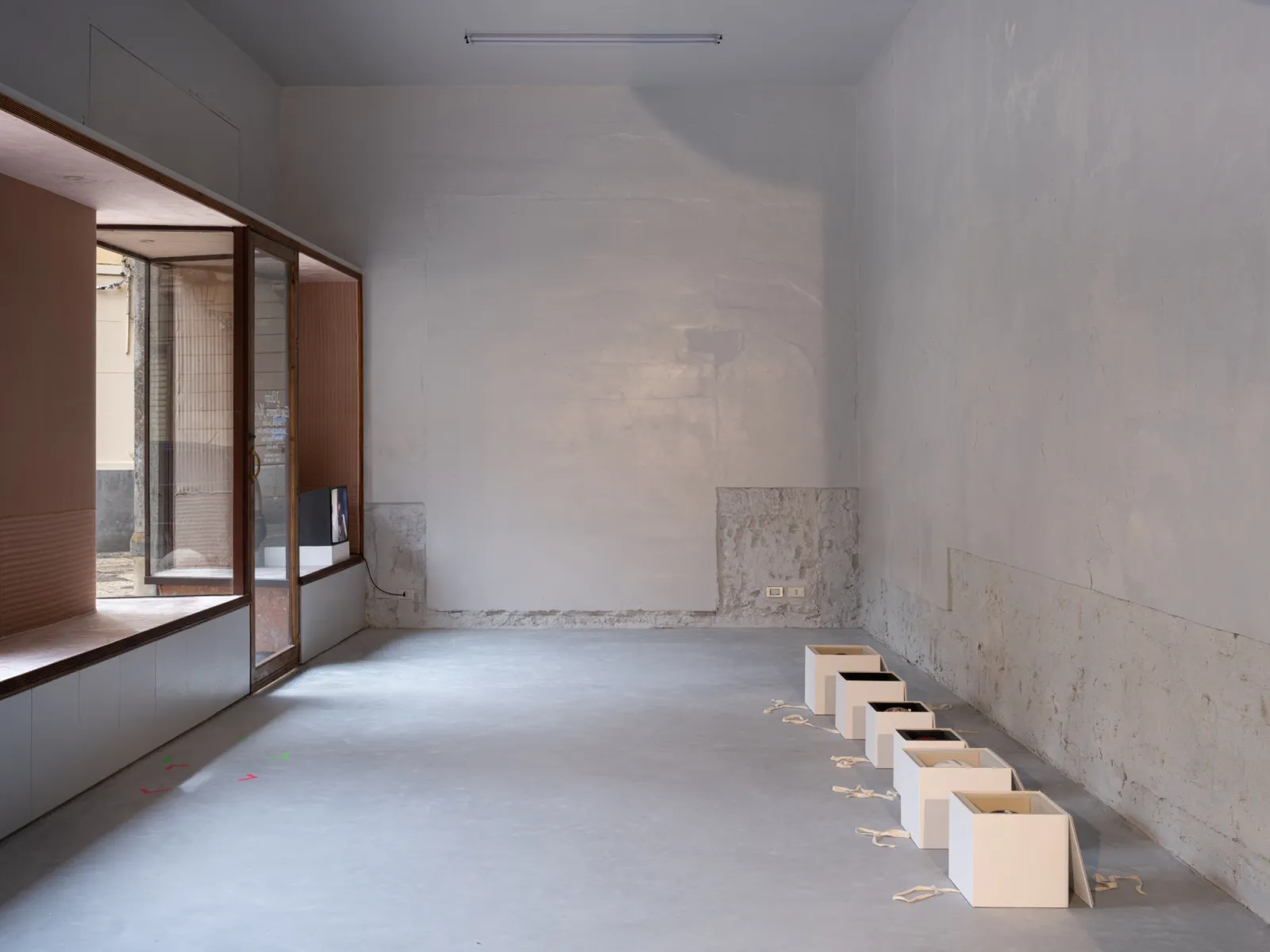
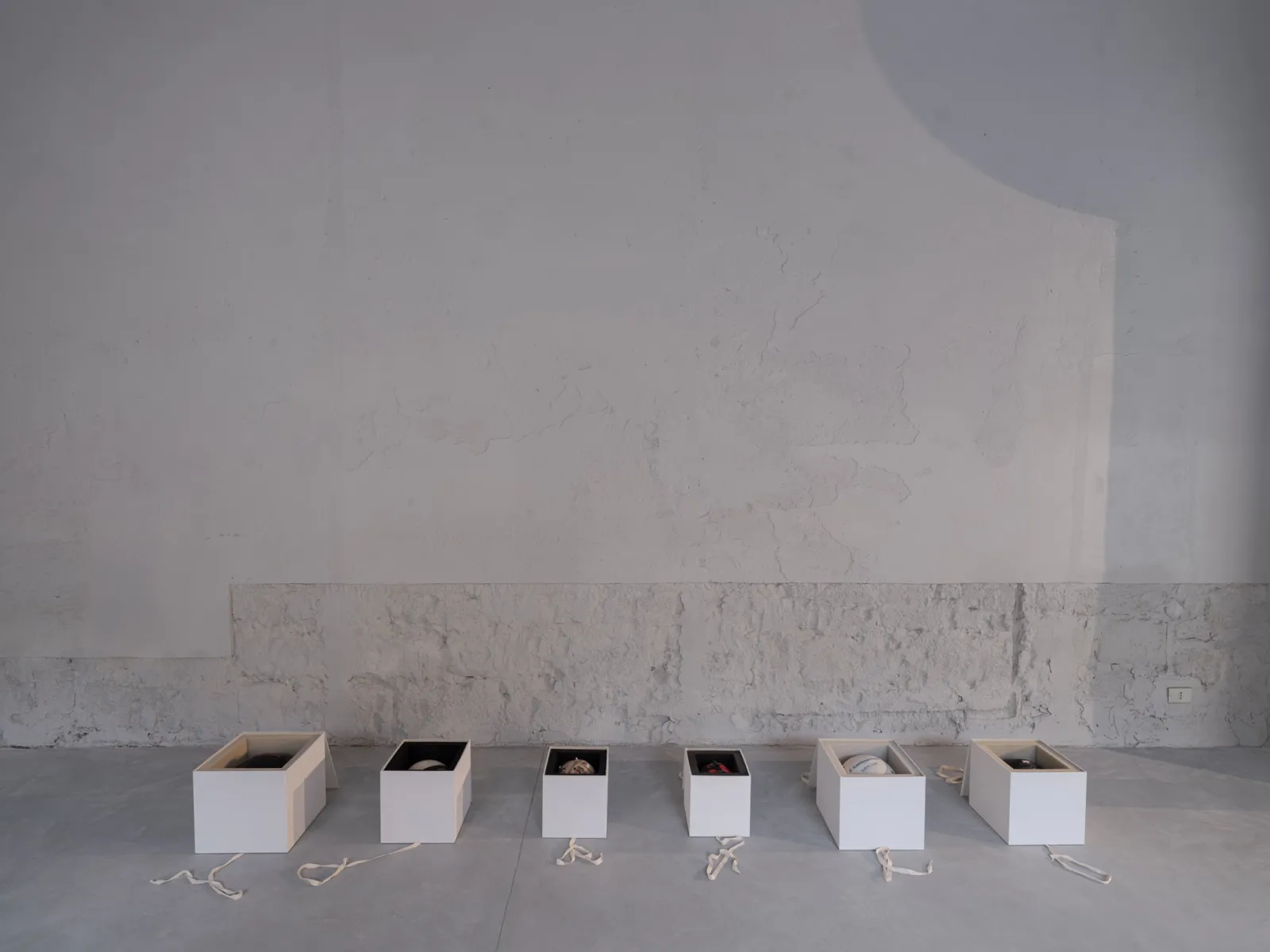
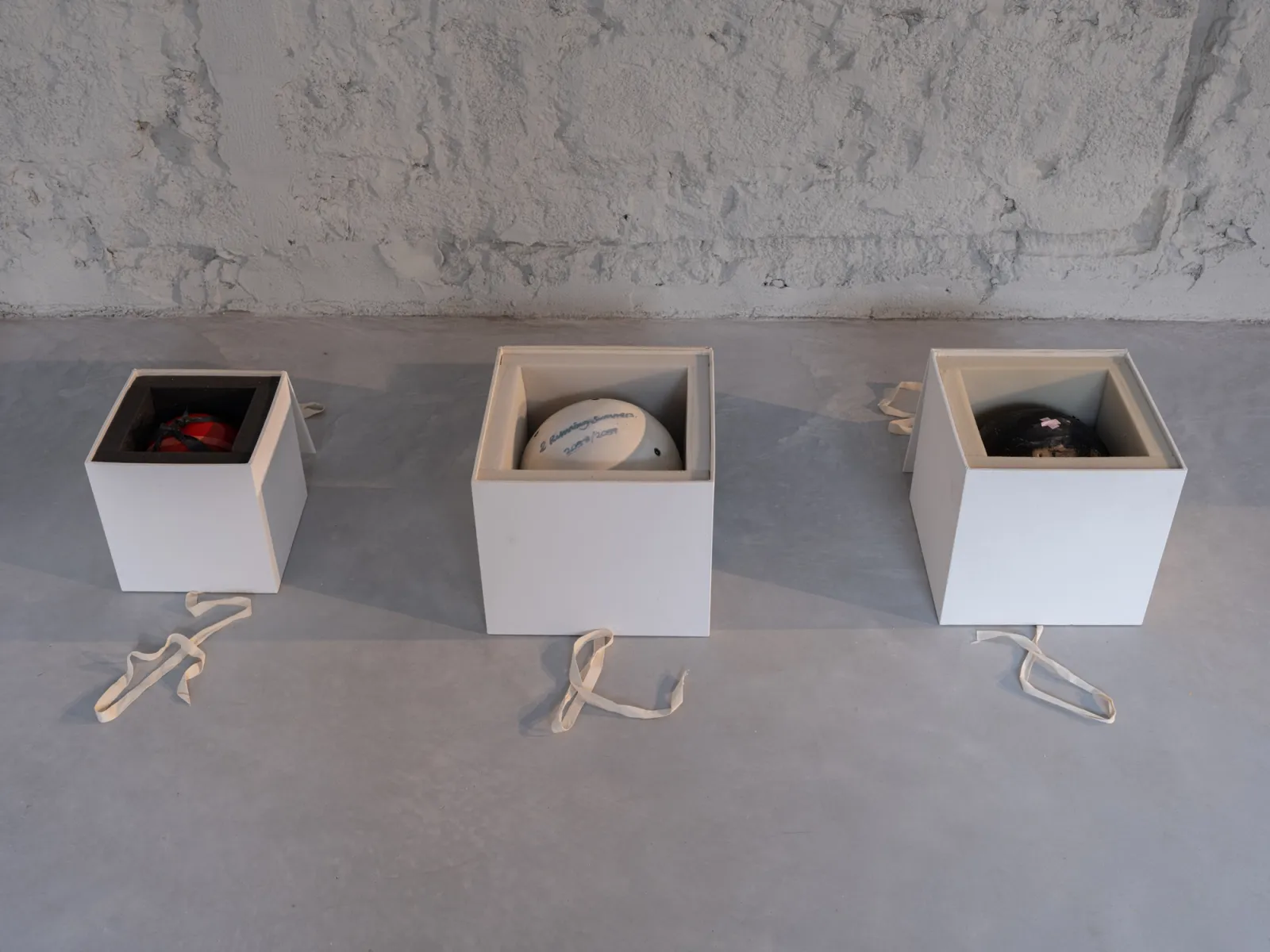
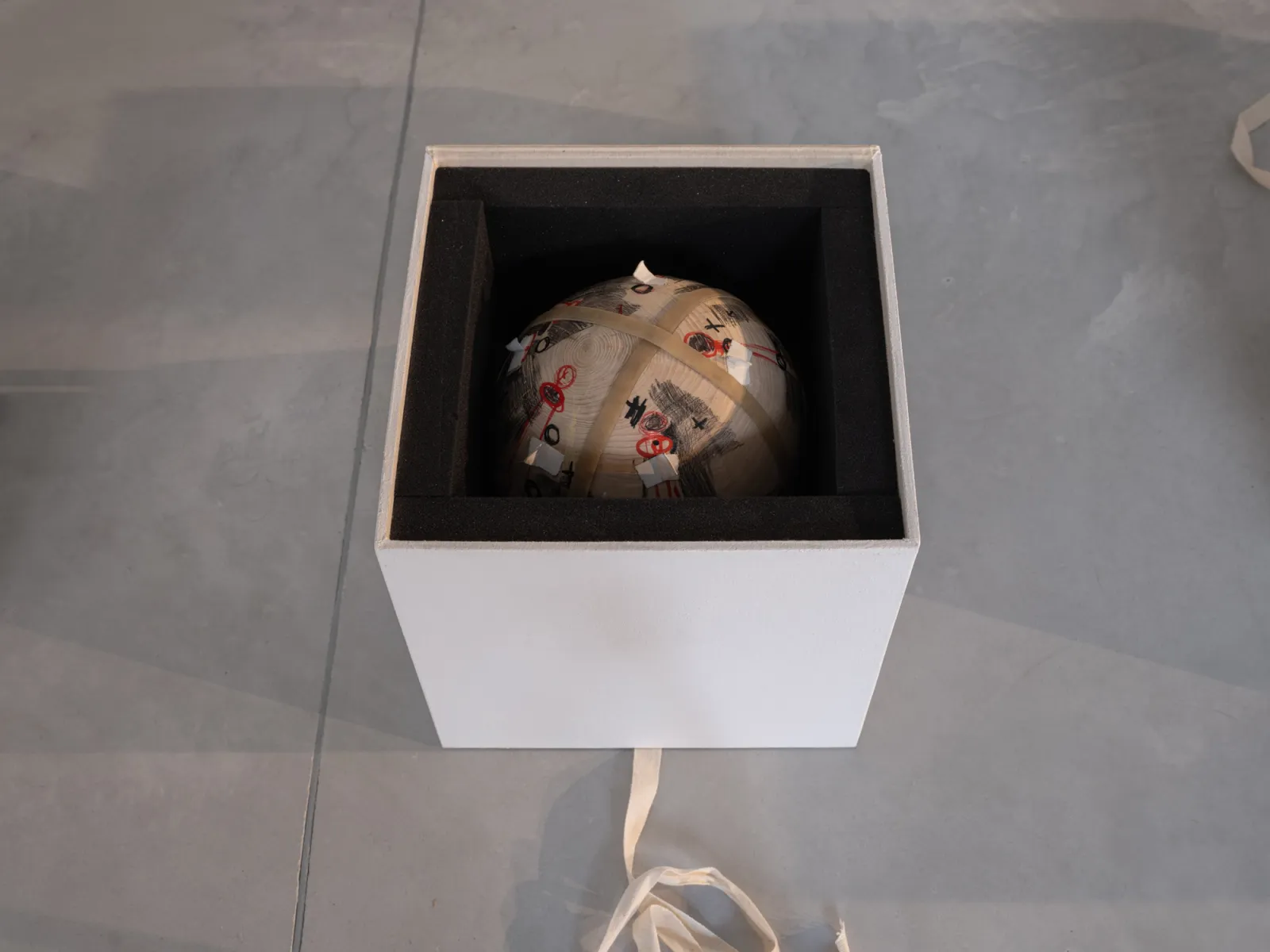
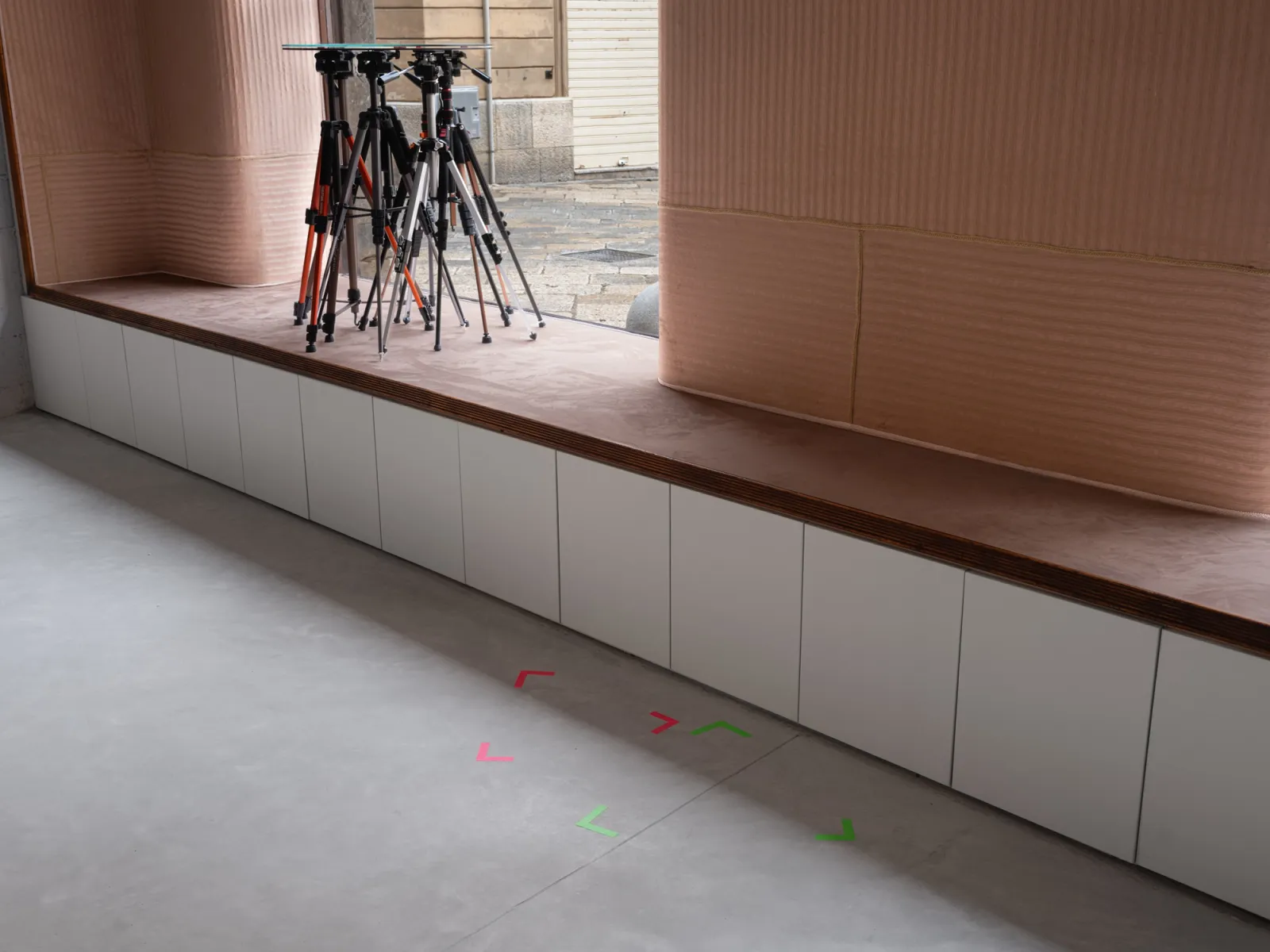
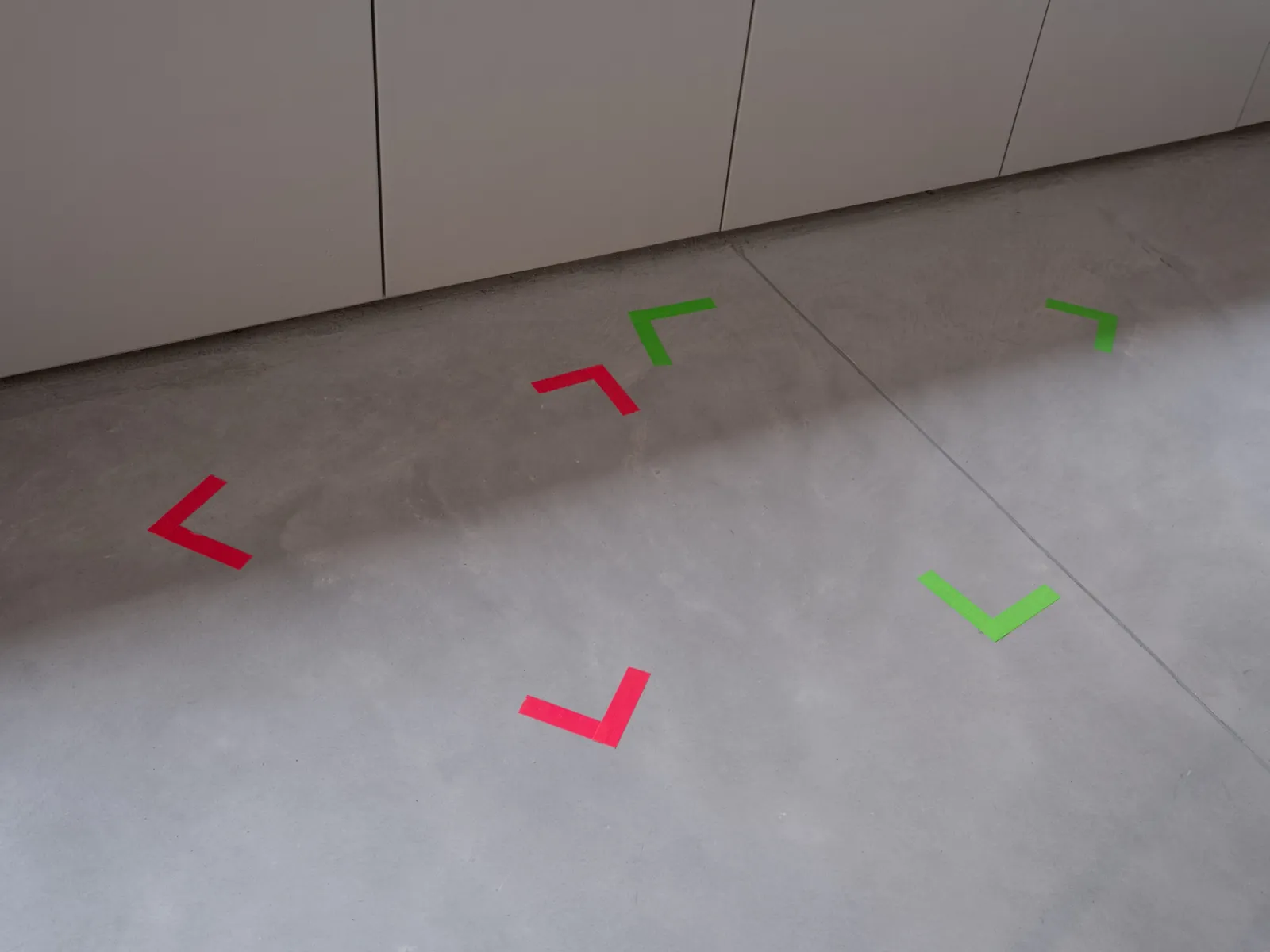
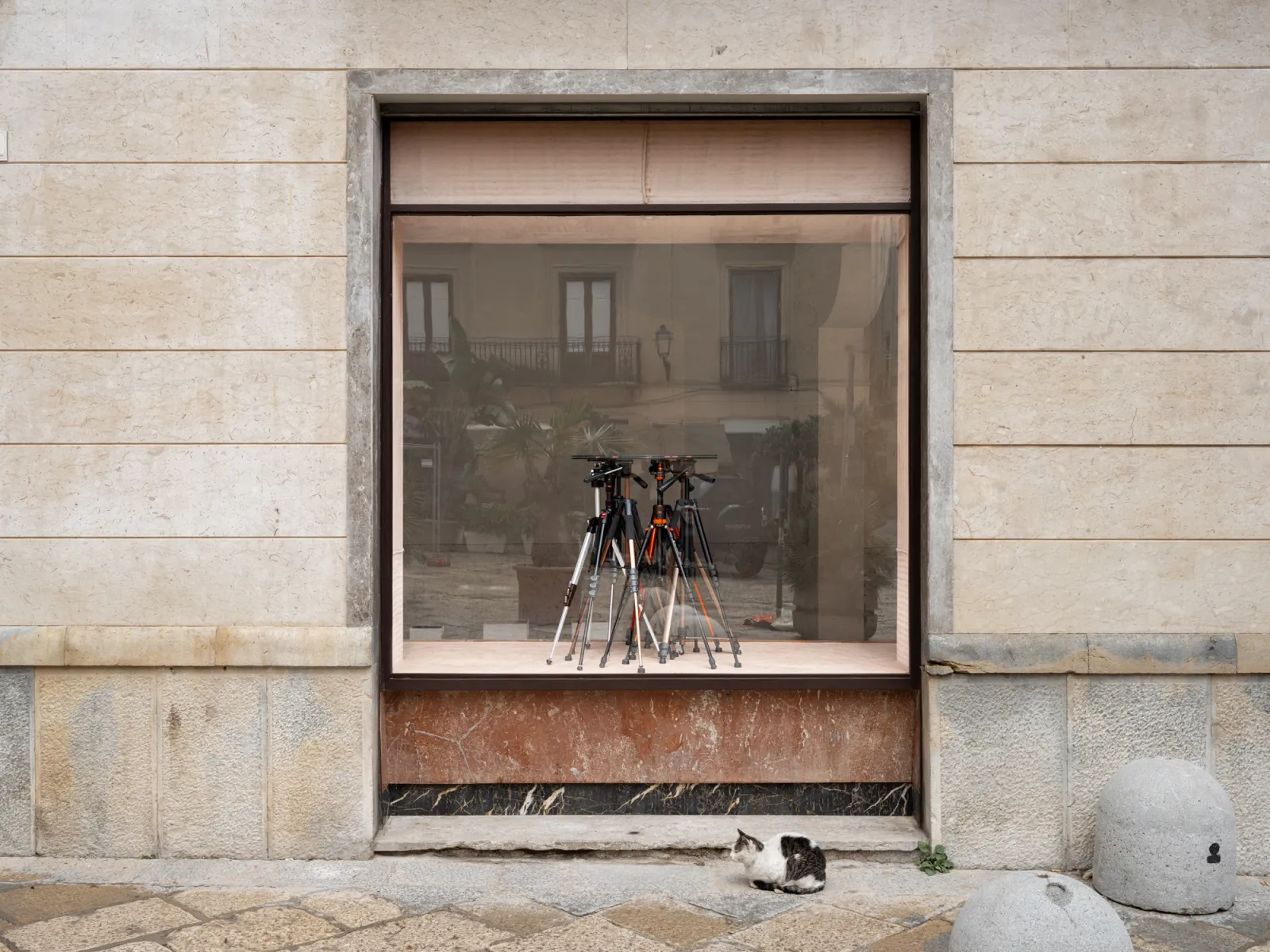
Raspé’s embodiment of the camera further suggests that the eye cannot exist without a body, or support, which is touched upon in the works of Nina Porter and Davide Stucchi. Made from hollowed wooden spheres, Porter’s simple, pinhole cameras resemble singular disembodied eyeballs, which, like cameras, are useless without someone to operate them. These works are made to be used at specified points in the future, indicated by titles such as Winter 35, For the year 2065, and summer 2074 (all 2025), a built-in futurity that nonetheless connects photography to its rudimentary beginnings. While the camera, as a proxy for the eye, needs some kind of body or tripod to hold it, Stucchi has made a new sculpture for INCURVA’s window display, imagining it as belonging to the camera store in Smithson’s text. A cluster of tripods holds up a circular glass top to create a display table for a camera. In the space, pieces of brightly colored tape affixed to the floor demarcate the placement of a tripod’s legs - often used by paparazzi photographers whose job is to pursue celebrities.
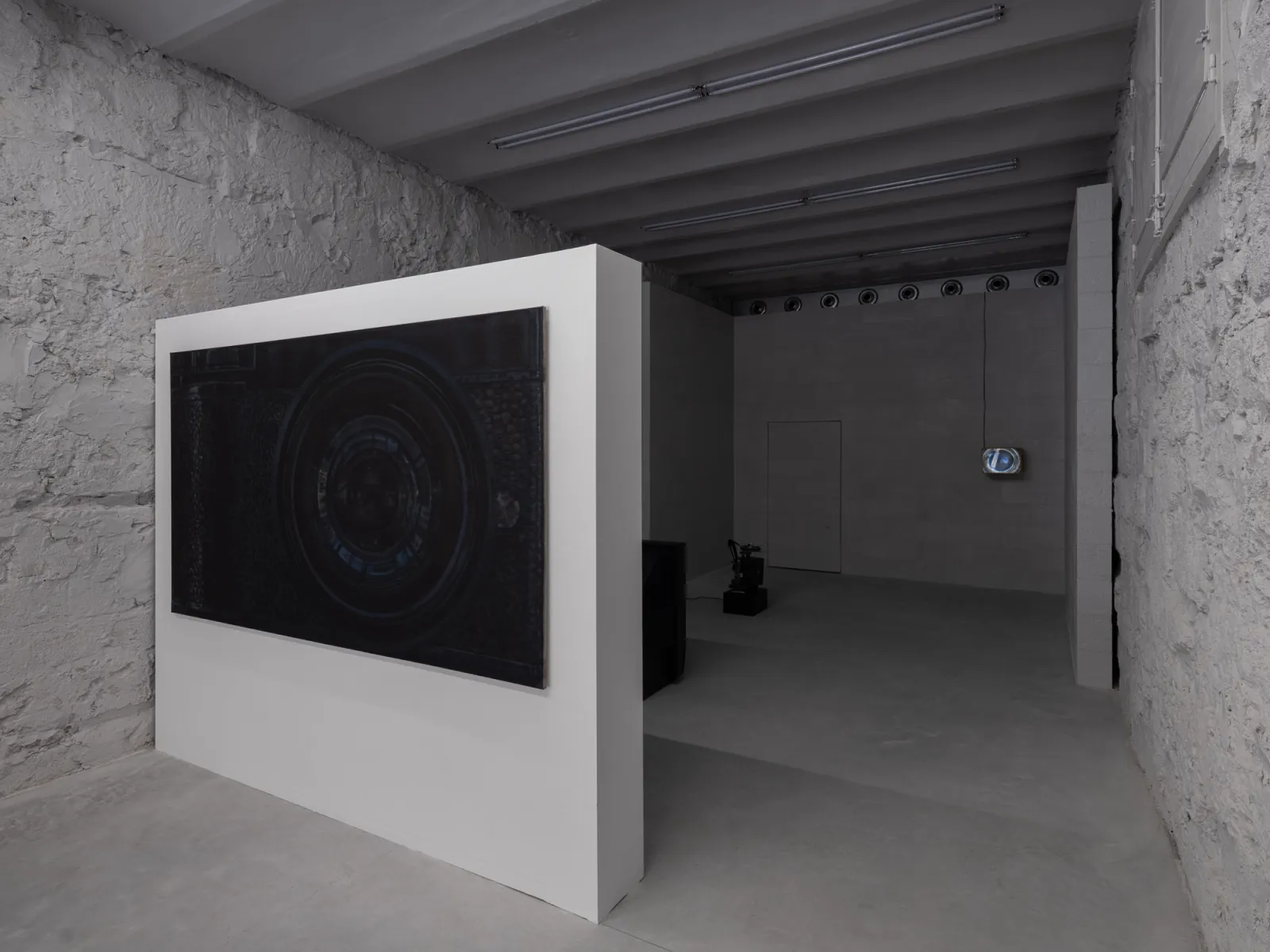
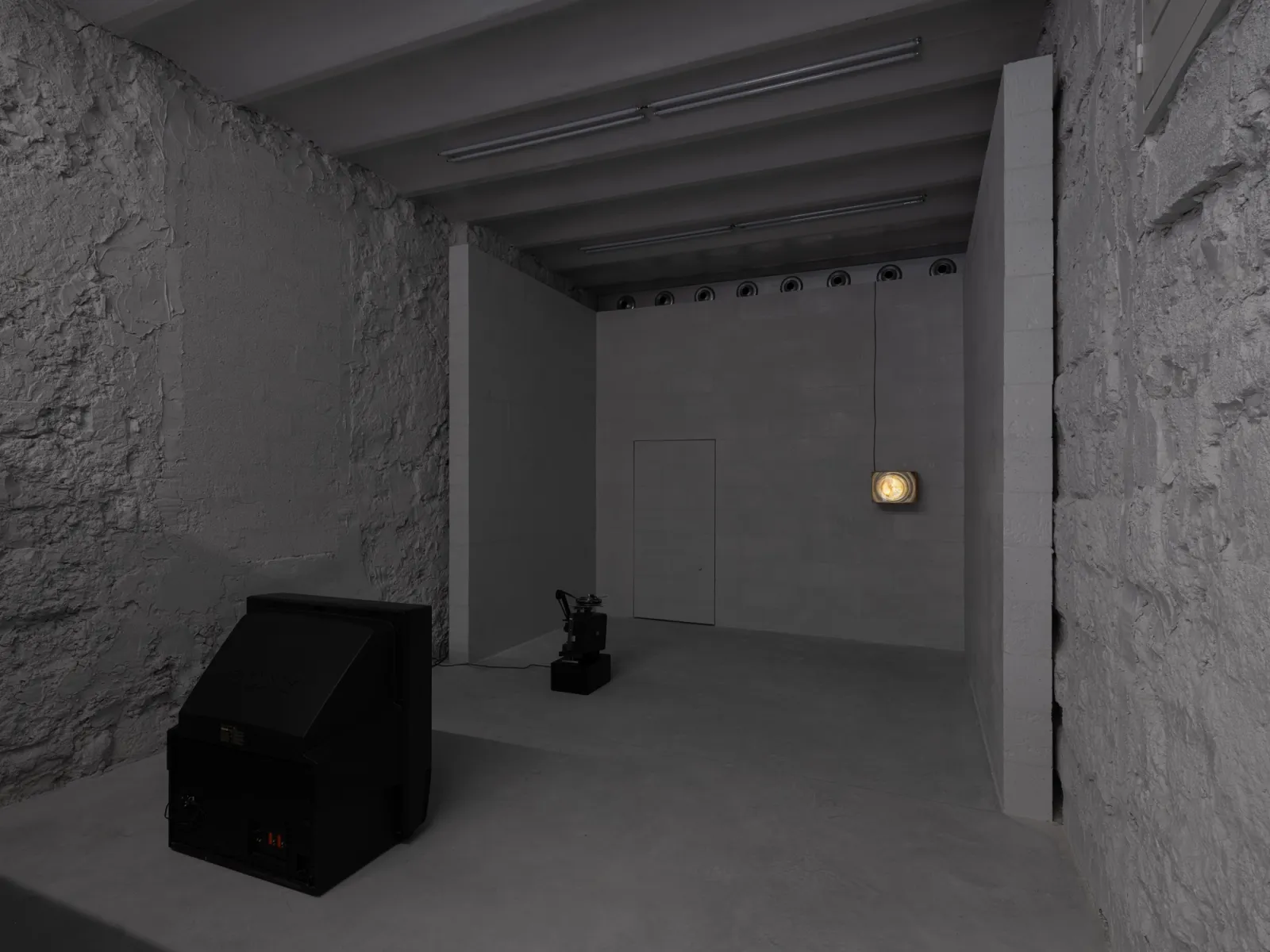
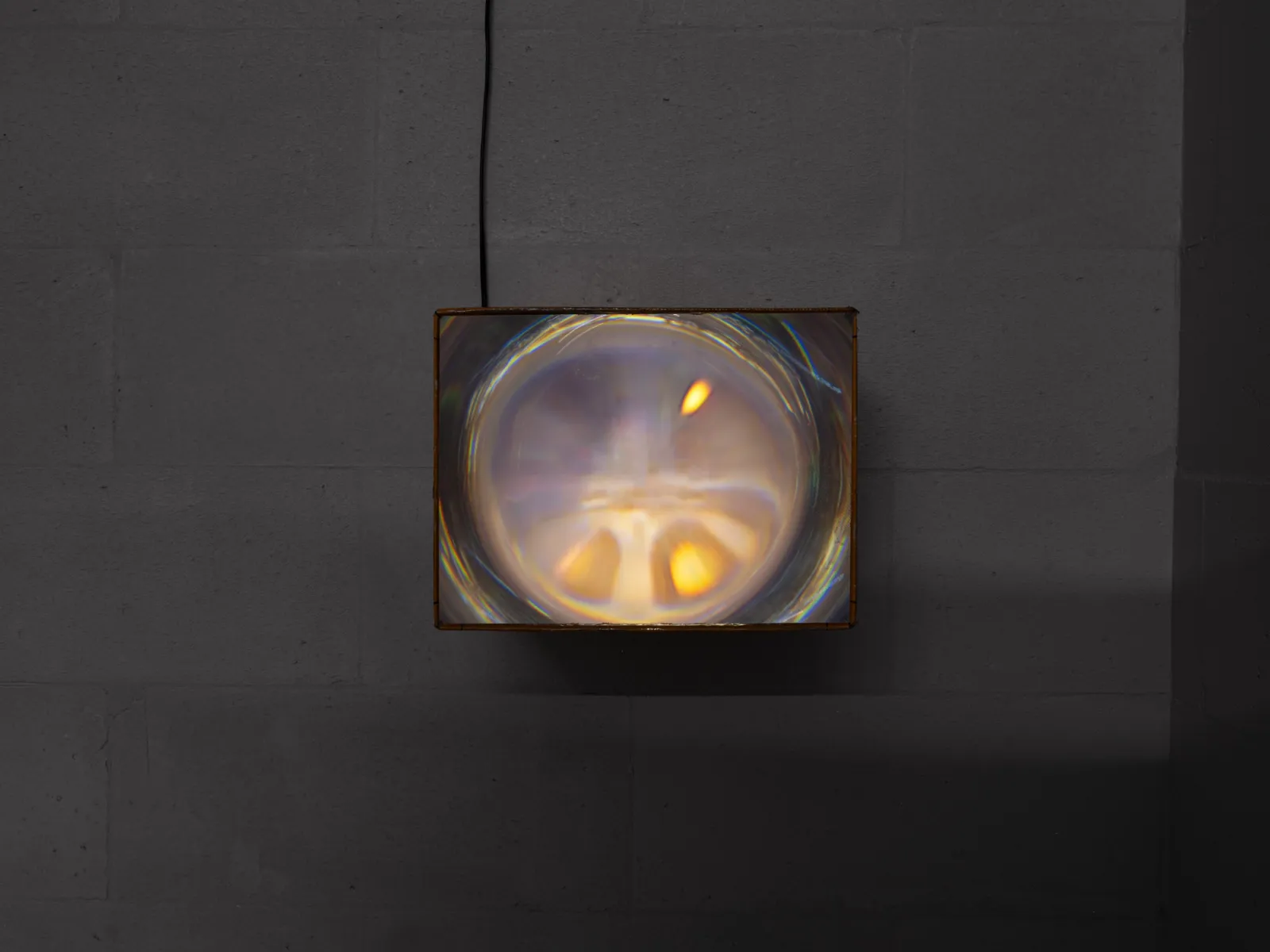
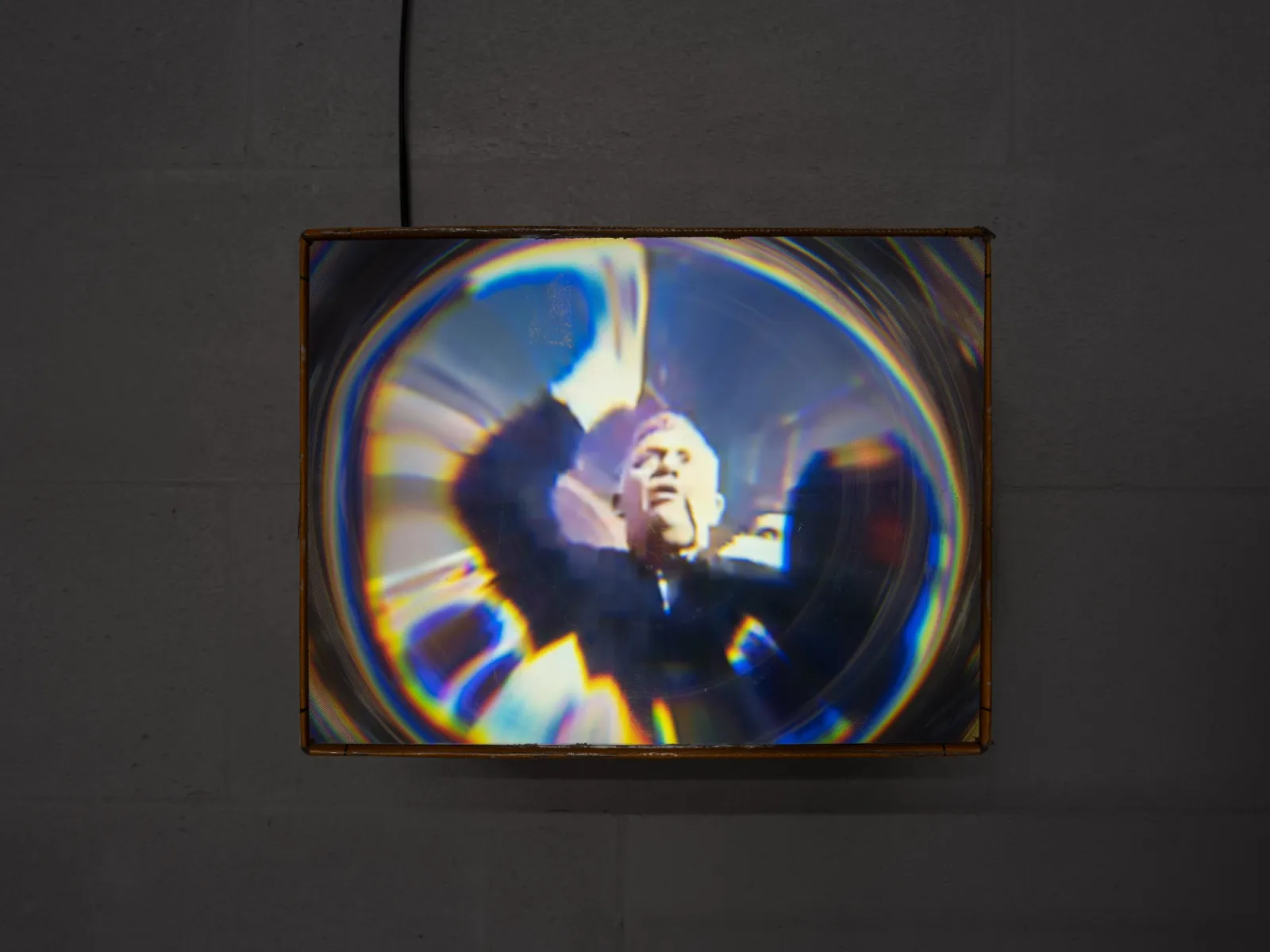
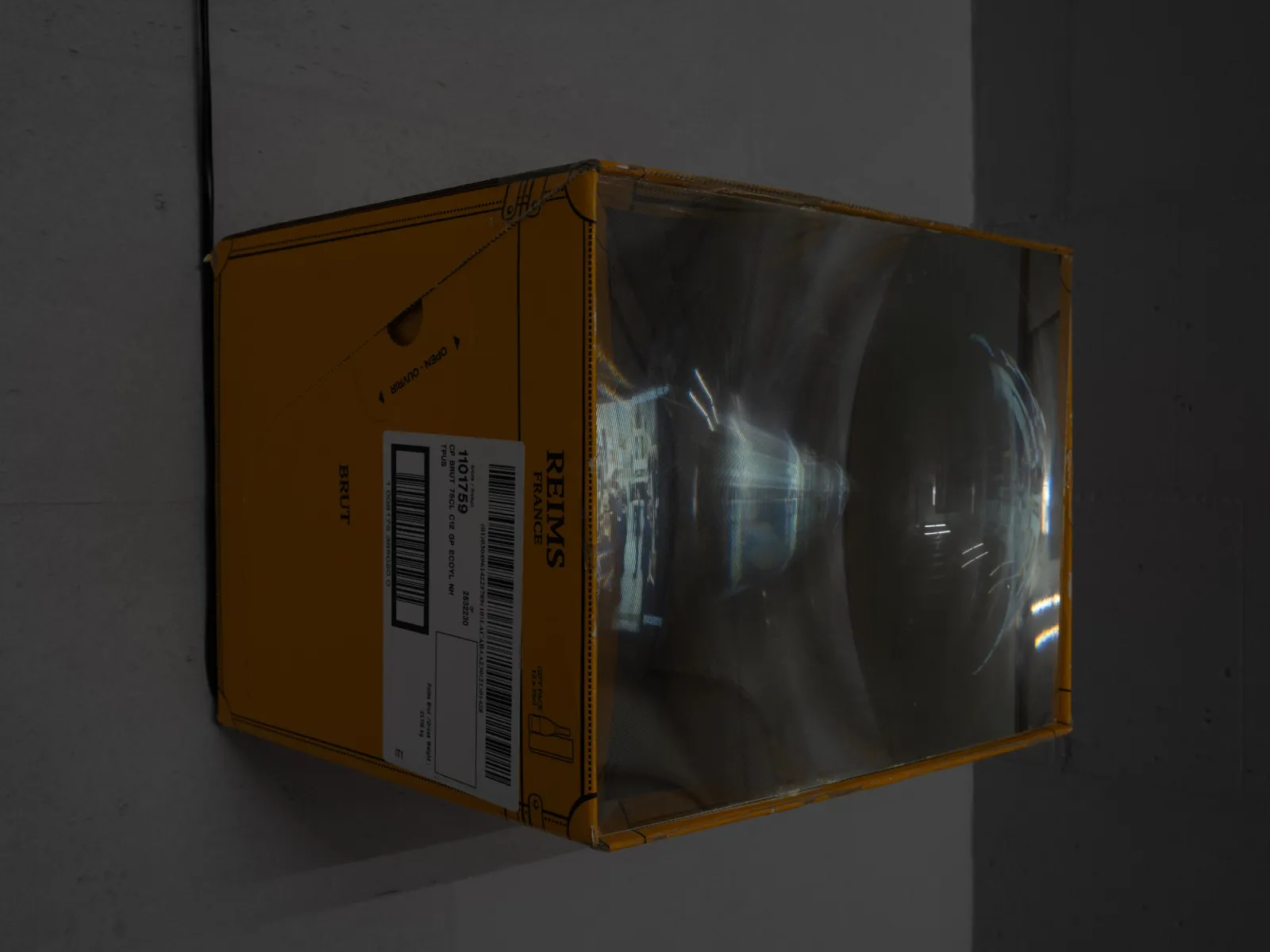
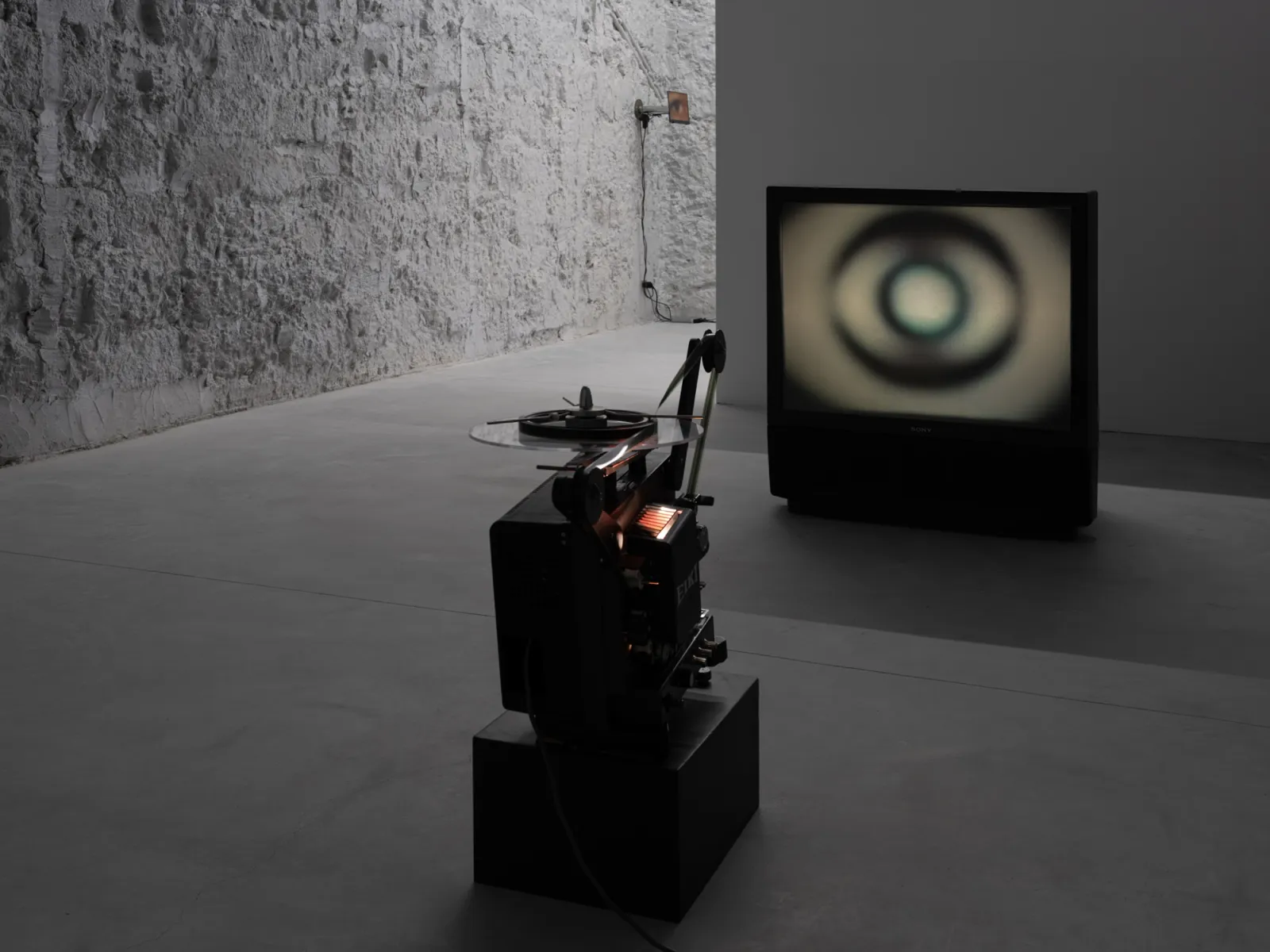
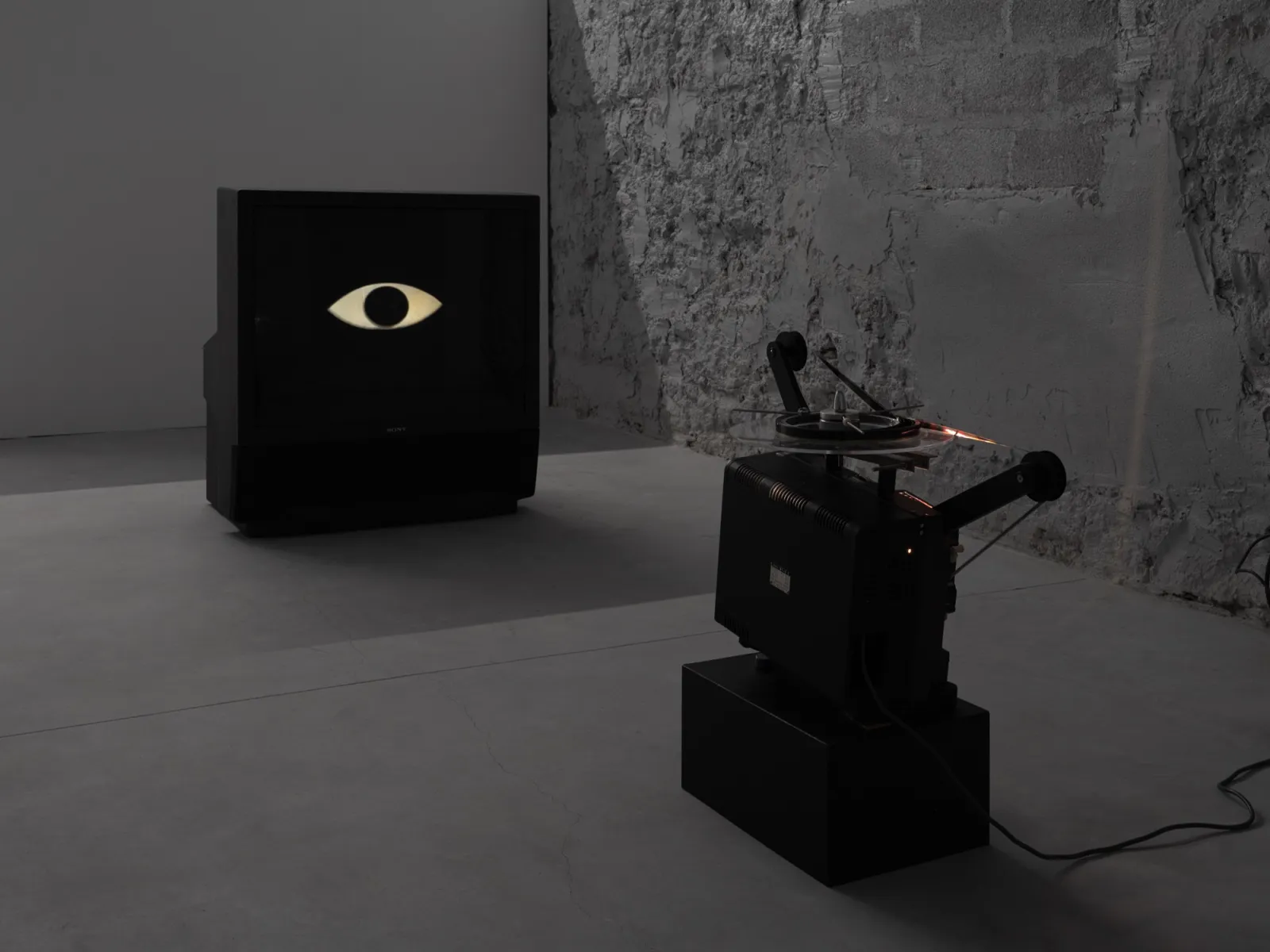
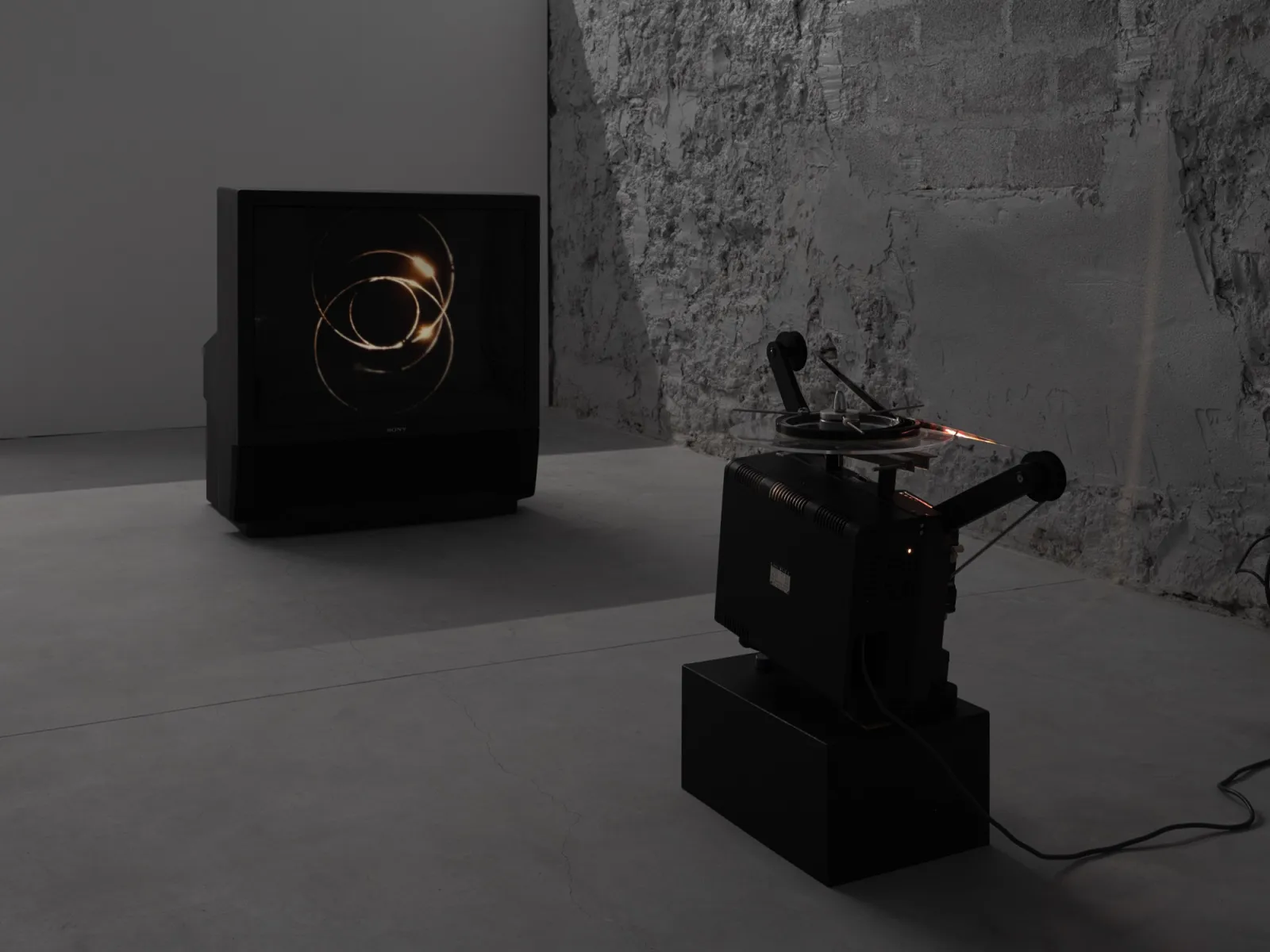
Other works represent passages of time in relation to technological changes. In Simon Dybbroe Møller’s sculpture, News (2010), a 16mm film is projected onto the flat surface of a rear projection television screen. Dybbroe Møller filmed simplified, ad hoc versions of global news broadcasting logos that incorporated the singular eye in their program’s title sequences and idents. Its soundtrack, a drunken rendition of CBS’ jingle, imbues the work with a foreboding sense of an ancient chant. Dora Budor, similarly, has folded several mediums into her piece, Drama in a Dramatized Society (2025). This so-called ‘video sculpture’ is a makeshift cube monitor made from a found champagne shipping box left over from a New Year’s celebration, and a Fresnel lens, which warps and distorts scenes from Marcel L’Herbier’s 1928 silent film L’Argent seen through it. Like Dybbroe Møller, Budor’s use of materials refers to developments in viewership; the Fresnel lens was used regularly in cathode ray tube monitors before flatscreen technology. The flattening of the image over time also speaks to a cyclopean vision that lacks depth.
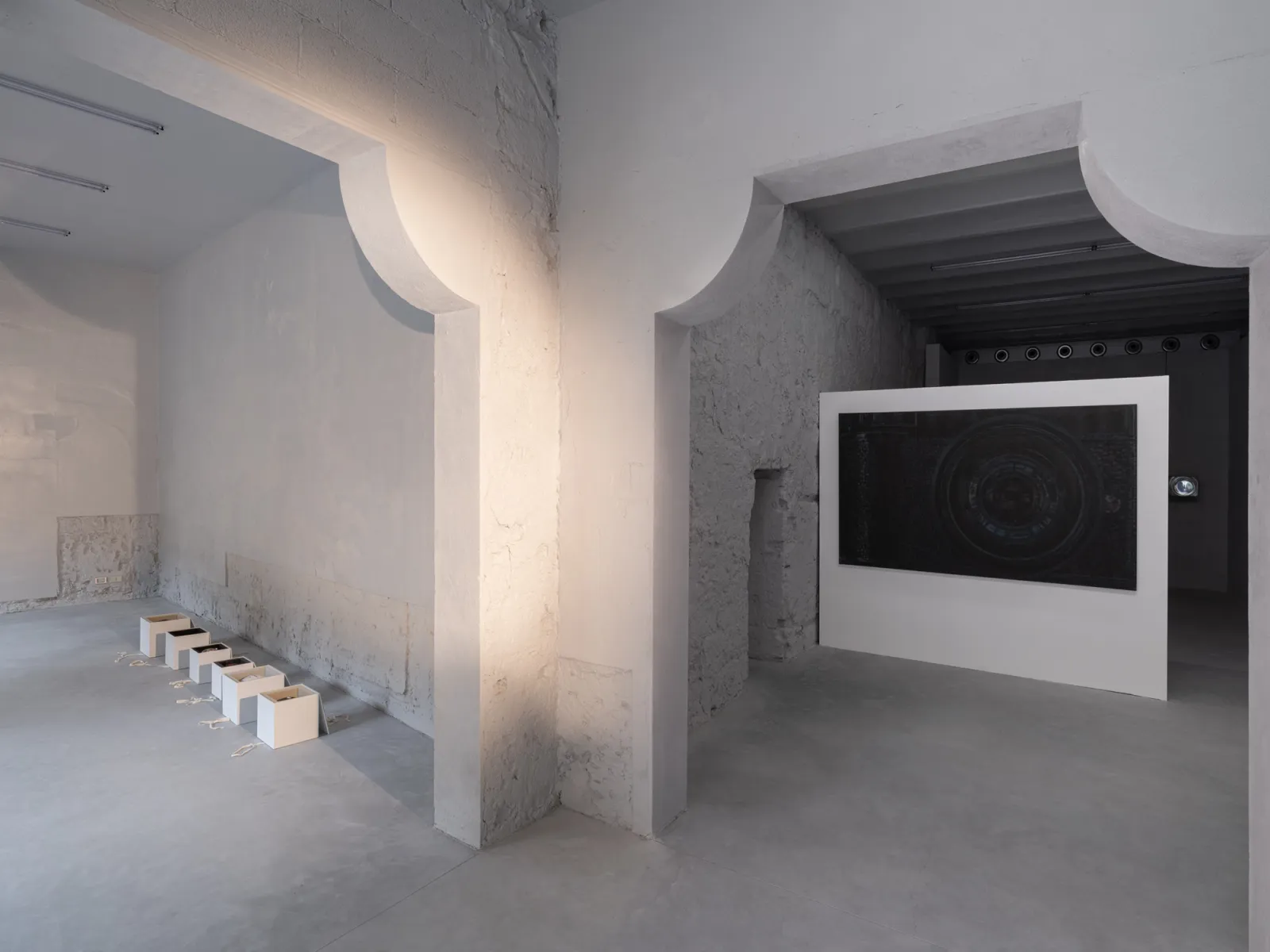
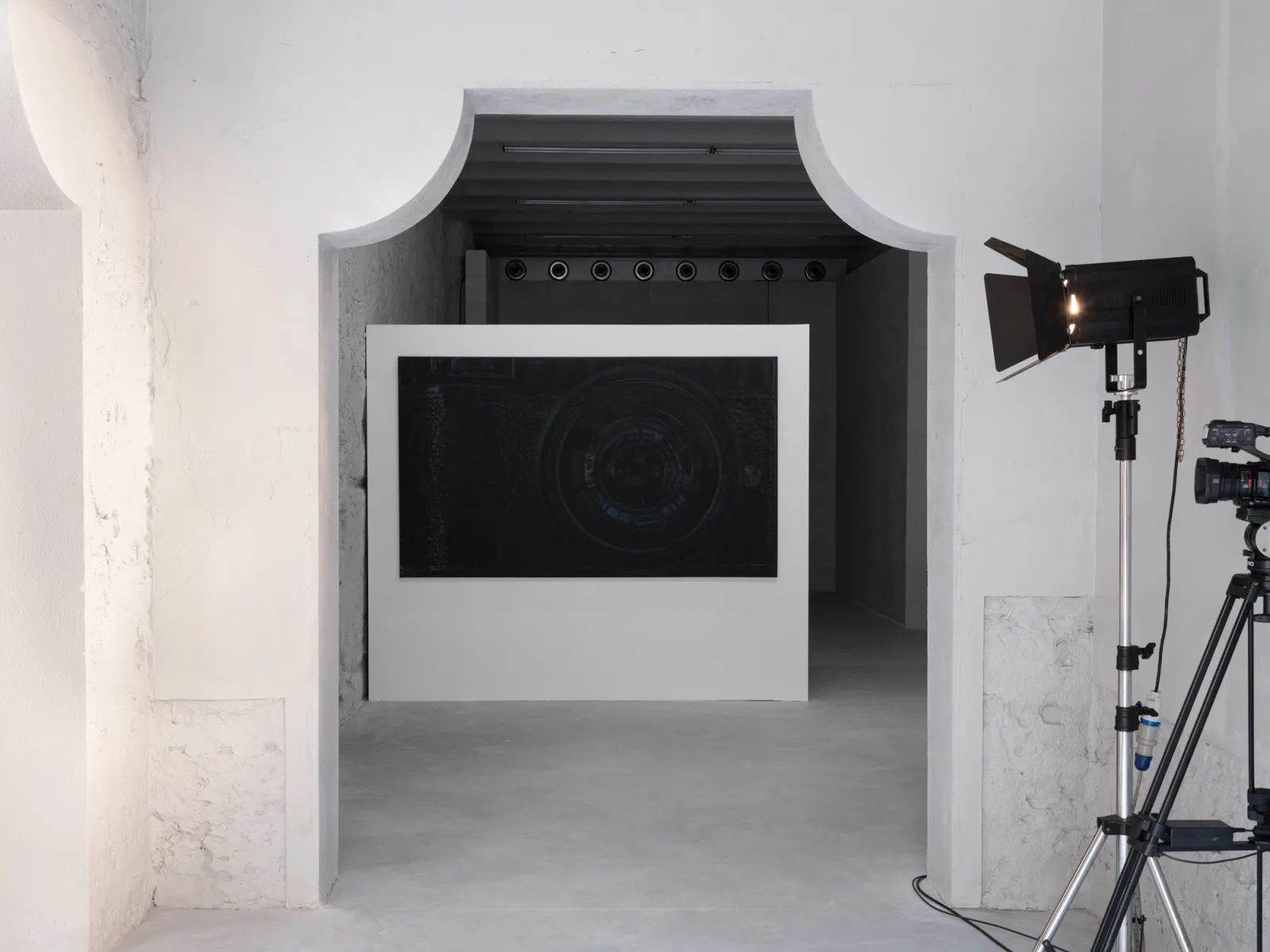
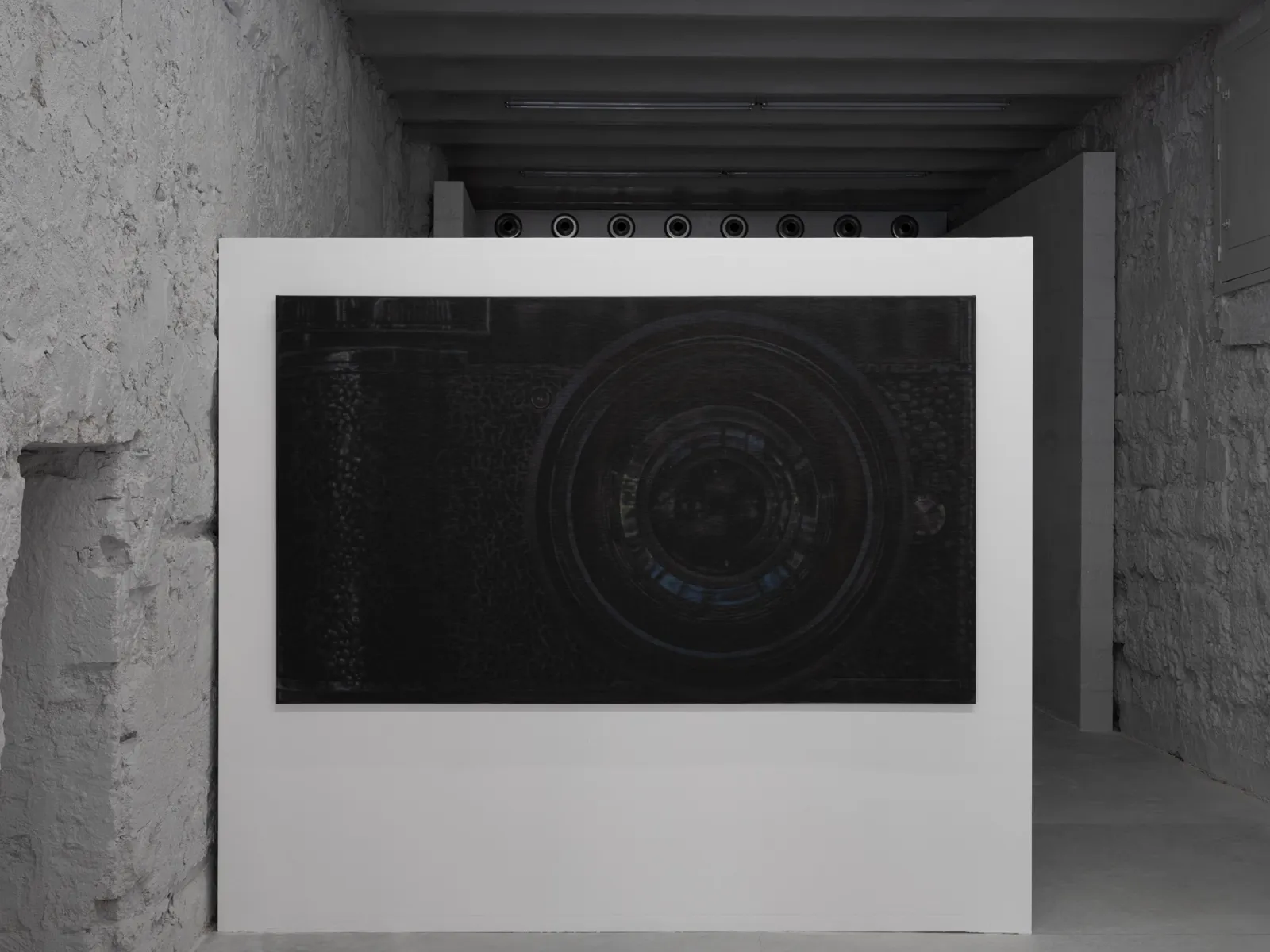
Jana Euler’s Camera 4 (Lumix) in use since 2018 (2021) is one of a series of paintings of popular Single-Lens Reflex film camera brands, such as Canon, Minolta, and, in this case, Lumix. Like many of her other paintings, the frame is a container for the image – here, the dimensions of the canvas match the shape of the camera as seen from the front. Scaled up, however, the lens appears as a gigantic eye protruding into space. In I Ciclopi (Eye, Camera, Myth), Euler’s painting is positioned in the centre of the show to create an omnipresence, magnifying the contemporary sensation that one can be captured on camera and recorded at any given moment.
Dora Budor (b. Zagreb, Croatia) is a New York-based artist and writer. Trained as an architect, Budor surveys the sites where the built environment and subjectivity work upon one another, honing in on the dissolution of life as a shared and consistent social form. Working with a wide range of media—including video, sculpture, installation, and sound—Budor’s exhibitions are developed in response to spatial and psychosocial conditions.
Budor’s work has been featured in major international exhibitions, most recently the Whitney Biennial (2024), the 15th Gwangju Biennale (2024), and the 59th Venice Biennale (2022). Her upcoming and recent solo institutional exhibitions include Bonner Kunstverein (2026), Neue Berliner Kunstverein / n.b.k. (2026), Nottingham Contemporary (2024), Kunsthaus Bregenz (2022), and Kunsthalle Basel (2019). She is currently a professor at the Städelschule in Frankfurt.
Jana Euler (b. 1982, Friedberg, Germany) lives and works in Frankfurt and Brussels.Since the mid-2000s, Euler has produced a heterogeneous body of work diagnosing painting's social, material, and historical bases. Known for her exacting technique and a cast of characters both real and imagined — from Leonardo to Duchamp, Ed Sheeran to Whitney Houston — she bloats, vaporizes, or perverts her sources to render the familiar inscrutable. Euler manipulates the conventions of figuration to find new outlets for painterly realism.
Selected solo exhibitions of Euler: the Leopold-Hoesch-Museum, Düren (2024–25); WIELS, Brussels (2024); Artists Space, New York (2020); Stedelijk Museum, Amsterdam (2017); Portikus, Frankfurt (2015), and Kunsthalle Zürich and Bonner Kunstverein (2014–15). Significant group shows include the 59th Venice Biennale, The Milk of Dreams (2022); Museum Brandhorst (2023); The Museum of Modern Art (MoMA), New York (2023); Kunstmuseum Basel (2022); Fondazione Prada, Milan (2021); KW Institute for Contemporary Art, Berlin (2021); Manifesta 13, Marseille, France (2020); Museum für Moderne Kunst, Frankfurt (2019); Tai Kwun, Hong Kong (2019); mumok, Vienna (2018); ICA Miami (2017–18); Musée d’art moderne et contemporain, Geneva (2017); and the Whitney Museum of American Art, New York (2013).
Jasper Marsalis (b. 1995, Los Angeles, US) lives and works in London, UK. Working across painting, sculpture, music and text, Jasper Marsalis elaborates a parallel between the space of the artwork and a performer on stage, both of which entail an experience of being consumed by audiences. Glaring spotlights are depicted throughout his work, obscuring their intended objects and acting as obstacles to vision. The tension of impermeability is mirrored in the sculptures whose surface fractures seem to chisel at opacity. By troubling perception, Marsalis interrogates the ocular centrism of visual art and the associated role of spectacle and access.
He graduated with a BFA from The Cooper Union in 2017. His upcoming and recent solo exhibitions include Chisenhale Gallery, London, UK (2026); Aspen Art Museum, US (2025), Emalin, London, UK (2024), Kristina Kite Gallery, Los Angeles, US (2023); Emalin, London, UK (2022); Midway Contemporary Art, Minneapolis, US (2020); Kristina Kite Gallery, Los Angeles, US (2020); and Svetlana, New York, US (2018).
Simon Dybbroe Møller As a prominent exponent of an art that emphasises connection, juxtaposition and relationality, Simon Dybbroe Møller’s works engage with the relationship between the weighty materiality of sculpture, and their photographic representation and mediation. Simon Dybbroe Møller explores what sculpture is or can be, in a world that is dictated by the photographic; a world where our economy and attention has shifted from the object to the image. Rather than settling into one medium or style, he continuously probes new territories, moving between film, photography, found objects, sculpture, writing, curating and teaching. Having studied at Kunstakademie Düsseldorf and Städelschule in Frankfurt am Main, Simon Dybbroe Møller is currently Professor at the Royal Danish Academy of Fine Arts School of Sculpture in Copenhagen where he curates the performance series Why Words Now.
Simon Dybbroe Møller had solo shows at Kunsthal Charlottenborg in Copenhagen Contemporary Art Centre in Vilnius, CAPC in Bordeaux, Kunsthalle Sao Paulo, Belvedere 21 in Vienna, Fondazione Giuliani in Rome, Kunstverein Hannover and Frankfurter Kunstverein. His work was included in the 1st Klaipėda Biennial; the 14th Taipei Biennial, the 5th Moscow Biennial, the 9th Berlin Biennial, the 2nd Turin Triennial, Momentum - the 6th Nordic Biennial and in group exhibitions at Barbican in London, MAST in Bologna, SMK National Gallery in Copenhagen, Palais de Tokyo in Paris, MOCA Detroit, CCA Wattis in San Francisco, Centre Pompidou in Paris, Hamburger Bahnhof in Berlin, MMK Frankfurt am Main, Museum of Contemporary Art Tokyo, Art Sonje in Seoul, Museum Ludwig in Cologne and KW in Berlin.
Nina Porter (b. London, 1994) lives and works between London and Frankfurt. Recent exhibitions have been held at Theta, New York; a. SQUIRE, London; Sweetwater, Berlin and Petrine, Paris.
Margaret Raspé (1933–2023) explored structures of perception across five decades, encompassing film, performance, and installation. She is best known for her camera helmet films from the 1970s and 80s, which captured a first-person perspective of housework and routine tasks. Her later works addressed ecology, sustainability, and spirituality while remaining grounded in the study of perception.
Raspé’s films gained early international recognition at venues like Anthology Film Archives and the Hayward Gallery. Her Berlin home served as a significant site for artistic exchange with groups like the Vienna Actionists and Berlin Fluxus. In 2023, her work was the subject of a major retrospective at Haus am Waldsee, Berlin, and is held in public collections including Museum Ludwig and mumok.
Recent and upcoming exhibitions include Museum Tinguely, Basel (2026); EMST, Athens (2025); and Musée d’Art Moderne de Paris (2024).
Davide Stucchi (b. 1988) lives and works in Milan. Davide Stucchi’s practice operates through minimal interventions, often acts of subtraction or alteration applied to pre-existing materials. His installations summon the presence of absent bodies, placing them in silent exchange with vulnerable objects within spaces marked by intimacy and private memory. These environments, at once physical and psychological, are shaped by a precision that resists ornament and excess.
Recent solo exhibitions include Cen- tro Pecci, Prato, Italy (2025); Martina Simeti, Milan, Italy (2024, 2021); Deborah Schamoni (2020); Sundogs, Paris, France (2019); Gregor Staiger Zurich, Switzerland (2019). His work has been featured in group exhibitions at Museion, Bozen, Italy (2024); Palazzo Ducale, Geno- va, Italy (2023); Fitzpatrick Gallery, Paris, France (2021); MACRO museum, Rome, Italy (2020); Quadriennale di Roma, Palazzo Delle Esposizioni, Rome, Italy (2020); Stadtgalerie Bern, Switzerland (2020); Fondazione Sandretto Re Rebaudengo, Turin, Italy (2018); Kunstv- erein Düsseldorf, Germany (2017); Quadriennale di Roma, Palazzo Delle Esposizioni, Rome, Italy (2016).
I Ciclopi (Eye, Camera, Myth)
2 April - 28 June 2026
Artists: Dora Budor, Jana Euler, Jasper Marsalis, Simon Dybbroe Møller, Nina Porter, Margaret Raspé, Davide Stucchi
Curator: Saim Demircan
Production: Alice Giovannini, Giulia Monroy
Exhibitions mediators: Alessia Calì, Rita Nola, Giuseppina Santoro
Documentation: Oskar Lee
Suppliers:
Airtech, Ambiente, Art Service, Auci, Bomart, Bortolotti, Mario Daidone, Infase, Sinergie.
Special thanks:
All members of INCURVA
Galleries who supported the project:
A.Squire, London
Cabinet, London
Emalin, London
Francesca Minini, Milan
Galerie Molitor, Berlin
Martina Simeti, Milan
Palace Enterprise, Copenhagen
Friends who helped:
Bar della Piazzetta, Trapani
Felix Gaudlitz
Franco Marino Videoservice, Trapani
Studio BB (Alessandro Bava, Fabrizio Ballabio)
Tilt-up, Trapani
Alberto Zenere
and lenders who wish to remain anonymous